


Hub Article Home decor category(Hub) Home Decor Styles Guide: 30 Popular Styles and How to Get the Look
Home decor styles are recognizable ways of decorating, each built on a consistent mix of colors, materials, furniture shapes, and patterns. The ones you’ll run into most often are modern, contemporary, minimalist, Scandinavian, mid-century modern, modern farmhouse, industrial, bohemian, coastal, and traditional, while organic modern is one of the fastest-rising styles of recent years.
Most style guides show you gorgeous rooms and leave you to work out how to afford them. This one walks through 30 interior design styles and pairs every one with a way to get the look on a budget or in a rental, because most of us are working with a few pieces we already own and a landlord who says no to nails.
Key Takeaways
- There are 30 main types of home decor styles, and they group naturally by mood: clean and modern, classic and glam, farmhouse and cottage, layered and global, and coastal and tropical.
- Most real homes mix two or three styles. A simple ratio like 70-30 or 60-30-10 keeps the mix looking planned.
- To find your style, save 30 to 50 pins of rooms you love and look for repeating colors, materials, and shapes.
- Every style below includes a budget or renter-friendly way to get the look, using peel-and-stick products, thrifted pieces, and textiles.
Different Types of Home Decor Styles: The Quick List
Here is the full home decor styles list at a glance. Each one is explained in detail further down.
| # | Style | Known For |
| 1 | Modern | Clean lines, no ornament, neutral base with a color pop |
| 2 | Contemporary | Whatever is current: soft curves, greige, bouclé |
| 3 | Minimalist | Fewer things, tonal palette, texture over pattern |
| 4 | Scandinavian | Light, cozy, functional, pale wood |
| 5 | Mid-Century Modern | Tapered legs, teak, warm retro colors |
| 6 | Japandi | Japanese calm meets Scandinavian function |
| 7 | Organic Modern | Warm neutrals, stone, curves, plants |
| 8 | Industrial | Exposed brick, metal, reclaimed wood |
| 9 | Traditional | Symmetry, dark wood, classic patterns |
| 10 | Transitional | Traditional shapes in a neutral contemporary room |
| 11 | French Country | Faded colors, toile, distressed finishes |
| 12 | Arts and Crafts | Handmade, honest materials, earthy palette |
| 13 | Art Deco | Geometric glamour, brass, jewel tones |
| 14 | Hollywood Glam | Mirrors, velvet, lacquer, high contrast |
| 15 | Modern Farmhouse | Shiplap, white walls, black accents, wood |
| 16 | Rustic | Raw wood, stone, cabin warmth |
| 17 | Country | Gingham, wicker, handmade charm |
| 18 | Cottage | Florals, soft colors, a collected look |
| 19 | Shabby Chic | Distressed white, pastels, slipcovers |
| 20 | Americana | Quilts, braided rugs, folk art |
| 21 | Grandmillennial | Chintz, skirts, scallops, old meets new |
| 22 | Bohemian | Layered textiles, plants, rattan |
| 23 | Eclectic | Mixed eras tied together by one thread |
| 24 | Maximalist | Bold color, pattern, and collections |
| 25 | Moroccan | Jewel tones, lanterns, tile, arches |
| 26 | Asian Zen | Calm, natural, low and simple |
| 27 | Southwestern | Terracotta, turquoise, woven textiles |
| 28 | Coastal | White, sand, sea blue, linen |
| 29 | Mediterranean | Terracotta, arches, stone, wrought iron |
| 30 | Tropical | Leafy prints, rattan, bamboo |
How to Find Your Home Decor Style First
Reading 30 descriptions in a row can make everything sound appealing. A faster way to find your own is to look at what you already respond to.
- Build a Pinterest board. Save 15 to 30 rooms you love without overthinking it.
- Look for repeats. Scroll back through and notice the colors, textures, and shapes that keep showing up.
- Pick three adjectives. Calm, cozy, bold, polished, airy. Test every purchase against them.
- Check what you already own. Which pieces would you keep if you moved tomorrow?
- Choose a lead style and a supporting style. One does most of the work, the other adds personality (more on this in the mixing section below).
Then factor in how you actually live. Pets, kids, a small apartment, and a lease that bans drilling all shape which styles will work in real life, not just in photos.
Modern vs Contemporary: The Difference People Mix Up
These two get used as if they mean the same thing, but they don’t. Modern is a specific design movement that took shape in the early to mid 20th century. Contemporary simply means what’s being designed and decorated right now, so it keeps changing.
| Modern | Contemporary | |
| Meaning | A fixed historical style | Whatever is current |
| Lines | Straight, clean, geometric | Clean, with more curves and softness |
| Palette | Neutral base with a few deliberate color pops | Soft neutrals like greige and taupe, plus current accents |
| Materials | Metal, glass, smooth wood | A mix of natural textures and sleek finishes |
| Changes over time? | No | Yes |
Modern, Minimal, and Urban Home Decor Styles
1. Modern
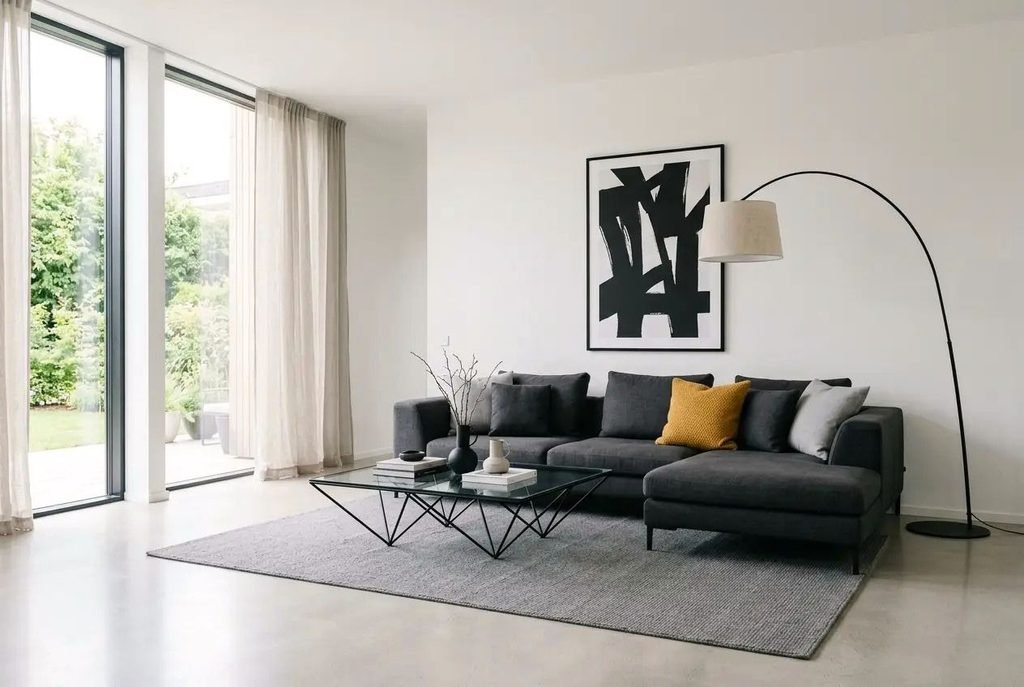
Modern design took shape in the early to mid 20th century, built on the idea that a room should be honest about its materials and free of decoration for decoration’s sake. Expect a neutral palette of white, cream, gray, and black, polished surfaces, strong geometric shapes, and furniture that sits low on simple frames. Glass, metal, and smooth wood do most of the talking, and a single bold color shows up on purpose, never by accident.
How to bring it home: Modern works best in rooms with a clear job, like a kitchen or media room, where pared-back and easy to clean is a real advantage. Clear your surfaces, choose a sofa with plain lines, and let one large abstract print supply the color. On a budget, look for plain-lined wood or metal pieces on Facebook Marketplace and skip anything with decorative hardware. Renters can get the look with thin black frames, a neutral rug, and lamps with simple geometric bases.
2. Contemporary
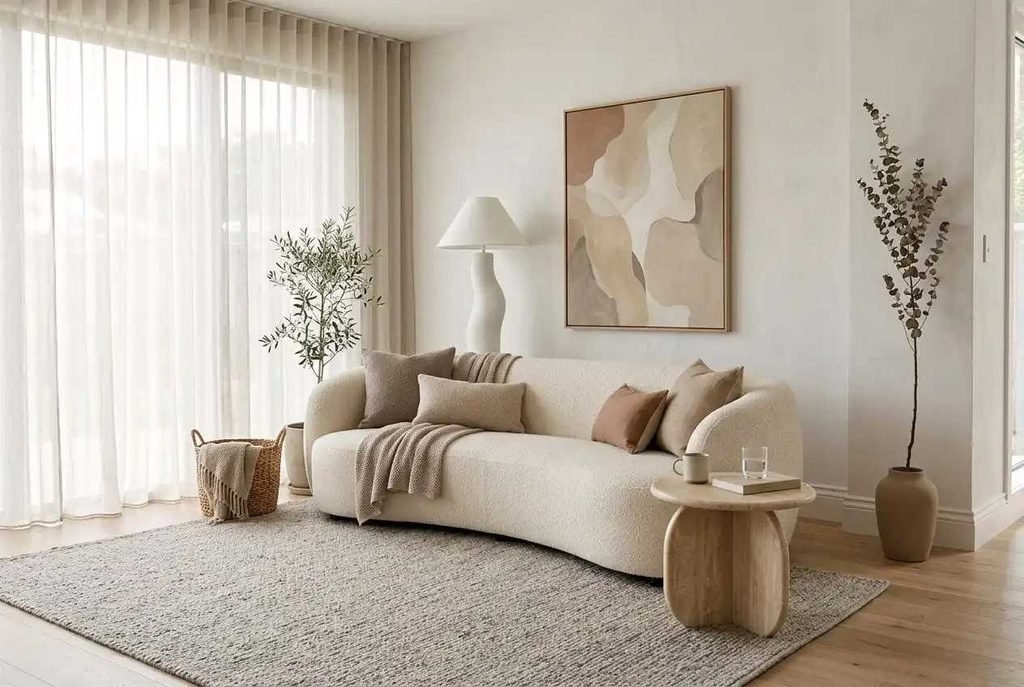
Contemporary is the style of right now, which means it never quite holds still. Today it pairs clean, sleek lines with curves, uses solid blocks of color in muted neutrals like warm white, greige, and taupe (or one confident bright), and keeps furniture low with straight legs or metal frames. Texture does the heavy lifting: bouclé, linen, and a mix of matte and metallic finishes. Graphic art or a sculptural lamp is usually the finishing touch.
How to bring it home: Start by editing. Pull out anything fussy, then add one rounded piece, like a curved side table or a bouclé accent chair, to take the edge off. Hold your palette to two or three neutrals and echo one accent color in a pillow, a rug stripe, and a piece of art so the room feels planned. A bouclé pillow cover and one oversized abstract print are the cheapest way to update an existing room.
3. Minimalist
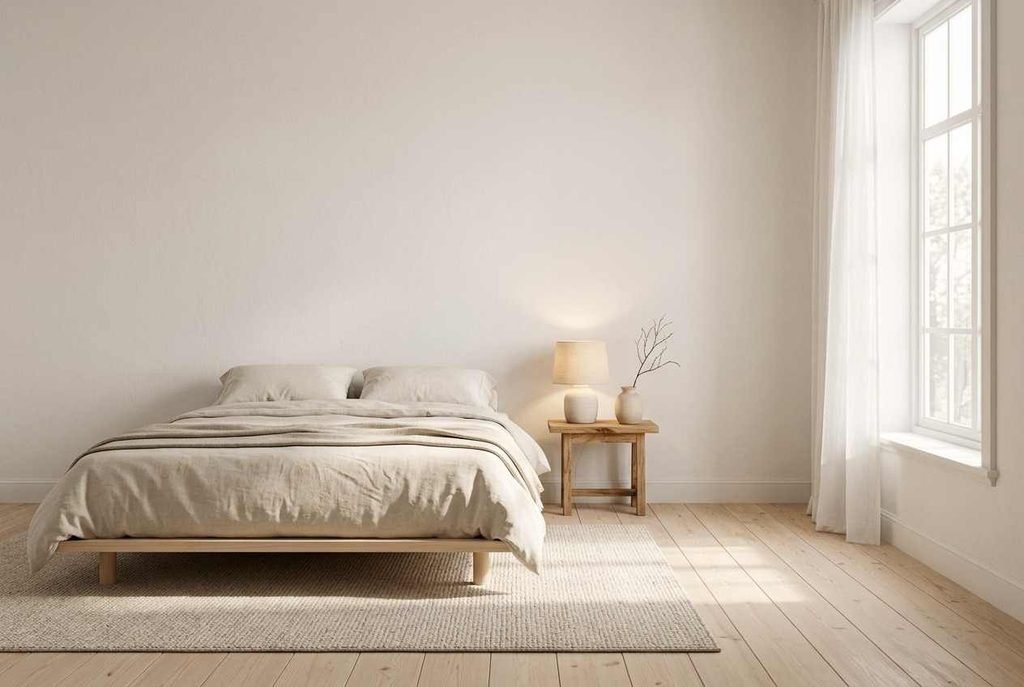
Minimalism is about intention. Every piece in the room has a job, storage is tucked away, and empty space is treated as part of the design instead of something to fill. The palette stays monochrome or softly tonal, texture replaces pattern, and silhouettes stay simple. It’s calm without being cold as long as you include natural materials like linen and wood.
How to bring it home: The cheapest minimalist upgrade is subtraction. Declutter first, then hold off buying anything until the room has been bare for a week and you can see what is actually missing. Use bedding in a single color, keep two or three objects per surface, and leave one wall empty on purpose. In a small apartment this style is especially forgiving, because less stuff means more visible floor and a bigger-feeling room.
4. Scandinavian
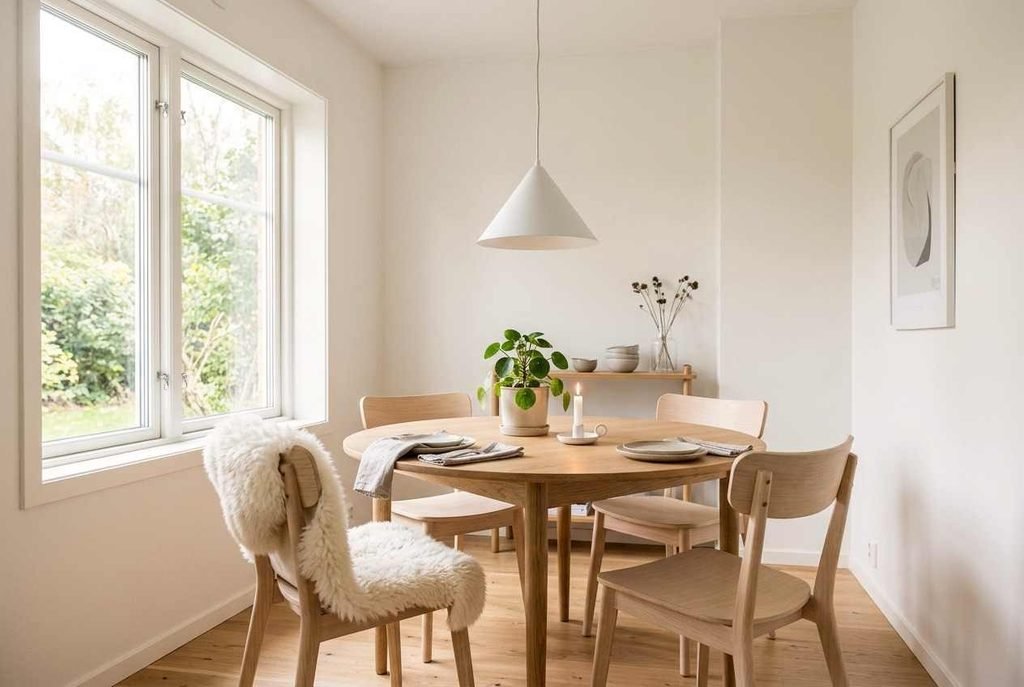
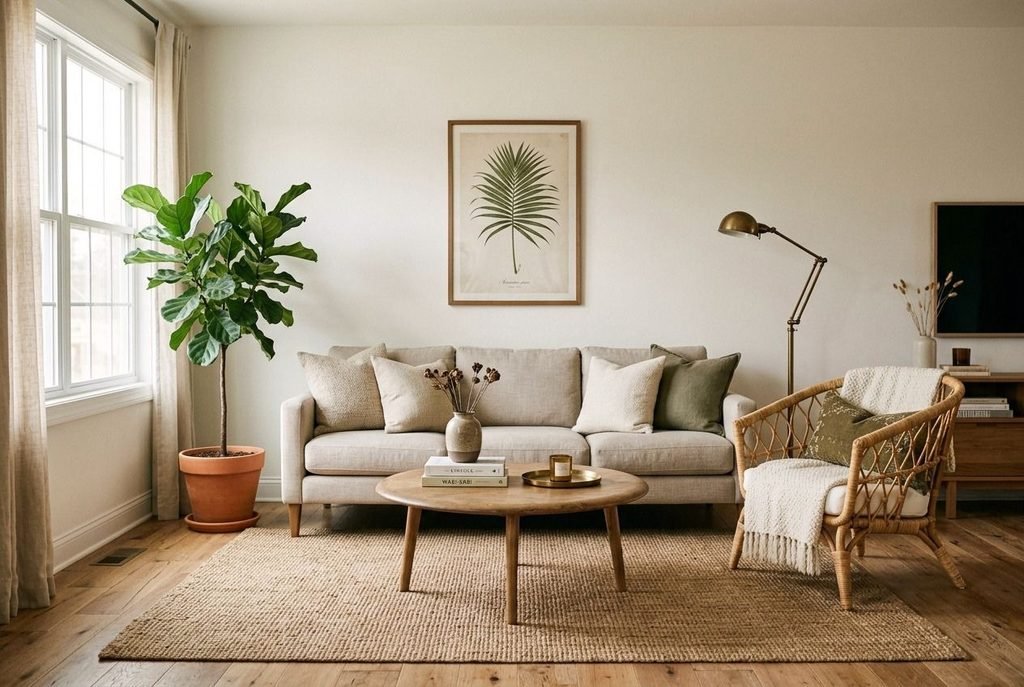
Inspired by Norway, Sweden, and Denmark, Scandinavian design values simplicity and function over decoration, and it makes the most of scarce winter daylight. Walls are white or warm white, floors and furniture are pale wood like oak and birch, and clean-lined pieces stand on tapered legs. Woven textiles, sheepskin, candles, and plants add the coziness the Danes call hygge.
How to bring it home: Keep windows as bare as privacy allows so light gets in, then layer lamps for the evening. A white or cream duvet, a woven basket, a few candles, and one plant covers most of the look for very little money. Affordable retailers like IKEA lean heavily into this aesthetic, and thrifted light-wood pieces mix in easily. Resist the urge to over-treat every surface; this style is at its best when it’s a little bit bare.
5. Mid-Century Modern

Mid-century modern had its big moment in the 1950s and 1960s, when Palm Springs was the weekend escape for Hollywood and Scandinavian designers were spreading the gospel of simple, functional, nature-inspired shapes. The signatures are tapered legs, teak and walnut, low-profile furniture, organic curves, and a palette of autumnal orange, mustard, olive green, and chocolate brown, sometimes with big glass walls to let the outdoors in.
How to bring it home: The beginner-friendly entry point is a single wood piece: a credenza, a side table, or a set of dining chairs mixed in with other furniture. Iconic designs like Saarinen’s Tulip table, introduced in 1957, cost a fortune, but estate sales and thrift stores often turn up genuine vintage pieces for less than new reproductions. A mustard or olive pillow and a sunburst mirror finish the look.
6. Japandi
Japandi, a mashup of Japanese and Scandinavian design, is warm minimalism. Furniture sits low and is made from natural materials like light oak and bamboo, handmade ceramics stand in for knickknacks, and the palette is soft: sand, charcoal, warm neutrals, and muted green. It’s restful by design.
How to bring it home: Choose fewer, better things. A low table or floor cushions, one ceramic vase holding a single branch, and linen textiles in oatmeal and sage get you most of the way. Leave generous empty space around each object, because that space is part of the look. Renters can add a paper lantern, a bamboo plant, and a light wood frame around one print.
7. Organic Modern
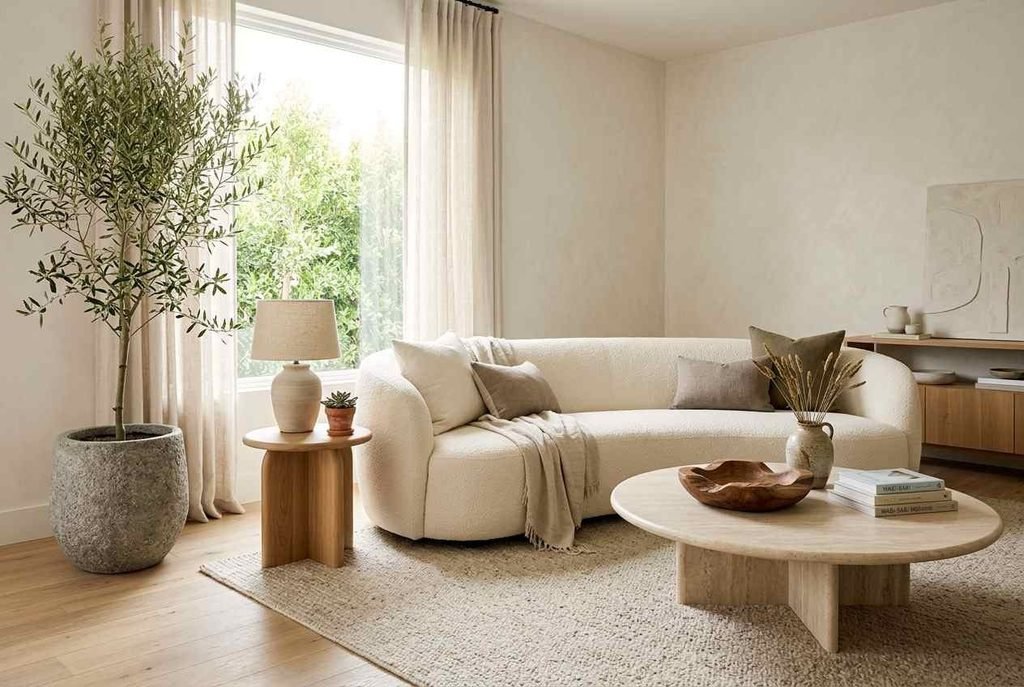
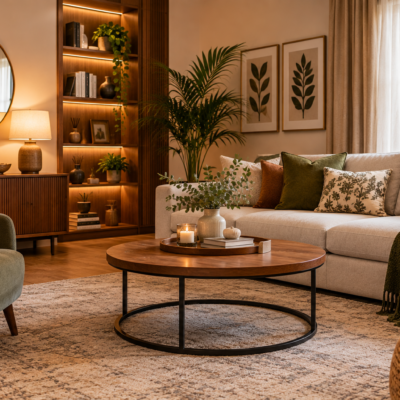
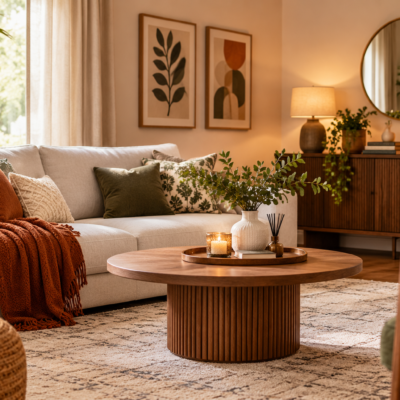
Organic modern is minimalism with a warmer, more tactile personality. The palette is neutral and edited: off-white, taupe, cream, and stone alongside oak and other natural woods. Sculptural, rounded forms and materials like travertine and bouclé bring softness, and big plants bring life. It’s one of the fastest-rising styles of recent years.
How to bring it home: Swap a sharp-edged coffee table for a rounded one, or add a wooden tray to soften a square one. A bouclé pillow, a stone or wood bowl, and one large plant do a lot. Faux travertine trays and candleholders cost a fraction of the real stone, and keeping wall art tonal and simple stops the room from getting busy.
8. Industrial
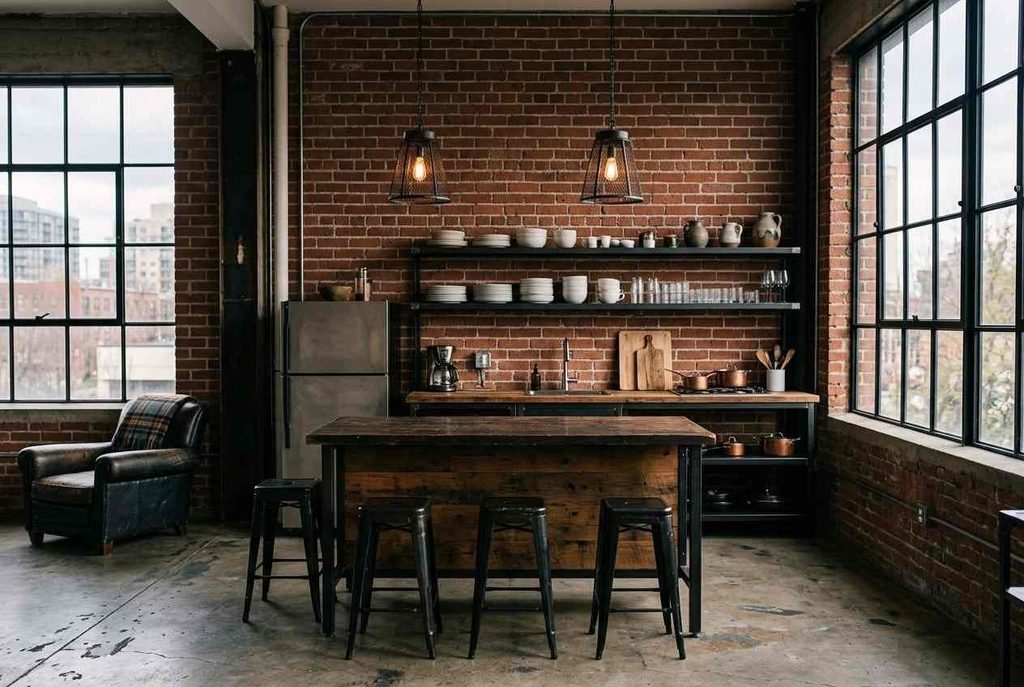
Industrial style borrows from converted lofts and restaurants, where pipes, ductwork, brick, and concrete are left exposed instead of hidden. Open floor plans, big windows, charcoal and brown tones, and furniture in rustic wood, metal, and leather define the look, with metal pendants and bare Edison bulbs as the classic lighting. (If the room starts to feel like a steampunk party, you’ve gone too far.)
How to bring it home: Renters can borrow the look without touching the architecture: peel-and-stick brick wallpaper on one wall, black metal shelving, a leather or faux leather chair, and a plug-in swag pendant light that needs no wiring. If you want to echo exposed beams, use open shelving in a similar tone.
Classic, Elegant, and Glam Home Decor Styles
9. Traditional
Traditional interiors pull from 18th-century English, 19th-century neoclassical, French country, and British colonial revival furnishings. Symmetry and classic styling rule, and the restrained palette tends toward mid-tone colors like deep green, burgundy, navy, and cream. Fabrics run from solids, stripes, and plaids to florals and chinoiserie, and rooms are finished with crown molding, rolled-arm sofas, and matching pairs of lamps.
How to bring it home: Traditional pieces are everywhere secondhand, so this is a style where thrifting pays off: wood dressers, brass lamps, framed prints, and antique mirrors. Buy in pairs and place them symmetrically. To keep it from feeling stuffy, keep your patterns in one color family and make them slightly larger in scale than you’d expect.
10. Transitional
Transitional design, which dates back to around the 1950s, bridges traditional and contemporary. Historic shapes meet updated materials and cleaner silhouettes in neutral color schemes of greige, taupe, cream, and soft gray, where comfort and a little luxury are the point. Honestly, it’s the safest pick when two people in a home disagree about style.
How to bring it home: Add one traditional piece, like a wingback chair or a fluted table lamp, to an otherwise simple, neutral room. Then repeat shapes: pleated drapes that echo the geometry of a frame, a textured ottoman that references the drum shade on a lamp. Keep your palette to three colors and use metallic accents lightly.
11. French Country
French country takes its cues from rural Provence: distressed woods, aged metals, and mixed patterns like toile, stripes, and florals. Blue and yellow is the classic color pairing, and cream, brick red, sage green, and lavender show up often. Carved furniture with curved cabriole legs and wrought iron details give it the look of a house that has been loved for a long time.
How to bring it home: Aim for “oh, this old thing?” energy, with pieces that look gently weathered. Linen curtains, a toile pillow, a wrought iron candleholder, and a vintage tray on a thrifted table do the job, and a white matelassé coverlet makes a great base for swapping patterned pillows by season. If you own your furniture, chalk paint on a dresser delivers the distressed finish.
12. Arts and Crafts
Arts and Crafts began in the early 20th century as a pushback against Victorian fussiness and factory-made goods, and it peaked in America between roughly 1910 and 1925. The philosophy is “truth in materials”: simple forms, visible craftsmanship, local woods, and no decoration that distracts from the workmanship. Think Craftsman bungalows, built-in bookcases, stained glass, and an earthy palette of olive green, deep red, and brown.
How to bring it home: If you don’t live in a bungalow, borrow the spirit. Handmade pottery, a solid wood side table, a stained glass or mica-shaded lamp, and an olive green pillow all say Arts and Crafts. Local craft fairs and thrift stores are better sources than big-box stores, and two freestanding bookcases on either side of a window mimic the built-in look.
13. Art Deco
Art Deco takes its name from the 1925 Paris exhibition of modern decorative and industrial arts, where crowds came to see streamlined, geometric, unapologetically urban design. It’s all about gleaming surfaces: geometric patterns, strict symmetry, brass and gold, mirrored glass, lacquer, and plush velvet in jewel tones like emerald and sapphire, with black for drama. Sculptural lighting finishes the picture.
How to bring it home: Start with shine. Candlesticks, decanters, or sculptures in a gold finish (it doesn’t have to be real metal, the gleam is the point), then a geometric mirror above a console. A fan-shaped mirror, gold frames, and an emerald velvet pillow are the budget shortcut, and peel-and-stick geometric wallpaper is the renter-friendly big move.
14. Hollywood Glam
Hollywood glam, also called Hollywood Regency, is inspired by the movie palaces of cinema’s first golden age. Every surface is meant to gleam: mirrored furniture, lacquer finishes, velvet, metallics, crystal chandeliers, and high contrast, often black and white with a saturated jewel color. It has a big personality and isn’t meant to be subtle.
How to bring it home: Go for layered glam rather than a full movie set. A large decorative mirror, velvet pillows, a glossy tray, and metallic candleholders carry the look, and mirrors layered over mirrors or a glass table add depth. Thrift stores are good for mirrored trays and brass accessories, and a can of gold spray paint updates metal pieces you own.
Farmhouse, Cottage, and Country Home Decor Styles
15. Modern Farmhouse
Modern farmhouse blends rustic warmth with clean lines. Shiplap walls, shaker-style furniture, black metal accents, wood beams, and a palette of white, black, sage, and warm wood make rooms feel welcoming without the heaviness of old-school country. Vintage finds sit comfortably next to simple modern shapes.
How to bring it home: Peel-and-stick shiplap on one accent wall is the biggest renter-friendly move. Add black hardware, wood cutting boards, a galvanized bucket, and a striped or gingham textile. You don’t need a real farmhouse sink to suggest the look; a vintage crock and a linen towel get the idea across for a lot less.
16. Rustic
Rustic design celebrates raw, tactile materials and a strong connection to nature. Reclaimed and distressed wood, stone, leather, wool, and chunky knits appear in earthy neutrals and warm browns. The look is cabin-like, and it depends on the visible grain and rough texture of its materials instead of ornament.
How to bring it home: Thrifted wood furniture with visible grain, a wool throw, and a wooden bowl of pinecones or dried branches go a long way. A faux stone or reclaimed wood peel-and-stick panel works in a rental. Keep metals dark and matte so they don’t compete with the wood.
17. Country
Classic, Americana-leaning country style is about white painted wood paneling, soft floral patterns, muted colors, and pops of red, black, or white. Floral, checked, and striped vintage fabrics are regulars, and everything has a handmade, folk-art quality: pottery, baskets, hand-forged metal. Antique shop and flea market finds are its bread and butter.
How to bring it home: Gingham dish towels, a quilt over the back of the sofa, a wicker basket, and mason jar vases cost almost nothing. Hunt flea markets for old crocks, pitchers, and wooden bowls, and group them in threes.
18. Cottage
Cottage style, including English cottage, is cozy and lived-in. Creams, soft greens, and ditsy floral prints mix with painted millwork, mismatched furniture, and a collected, garden-inspired feel, as if a few generations had each added something to the room.
How to bring it home: Fresh or dried flowers in mismatched vases do most of the work. Add floral cushion covers, thrifted china on display, and one painted wood piece. Renters can lean on textiles, since fabric changes the feel of a room without touching a wall.
19. Shabby Chic
Shabby chic, popularized in the 1980s, is romantic and softly worn: weathered white-painted furniture, painted motifs, floral prints in muted colors, white slipcovered sofas, and vintage accessories. Think ivory, blush, and faded pastels.
How to bring it home: Today’s version is lighter on fussy florals and heavier on texture. Rumpled bedding in blush or white, a slipcover, vintage frames, and a casual canopy or sheer curtain set the mood. Keep antiques and accessories to a minimum and dial up the pastel. If you own your furniture, light sanding on painted edges creates the worn finish.
20. Americana
Americana celebrates American folk and heritage design: quilts, braided rugs, folk art, vintage signs, and a palette of muted red, navy, cream, and natural wood. It’s having a revival as interest in American-made design grows, and it works best in small doses instead of as a full theme.
How to bring it home: A small braided rug at the entry, one quilt-pattern throw, and a framed vintage-style print are enough. Spindle-back chairs and shaker silhouettes anchor the room. Skip the flag-covered theme and reference the heritage with texture and craft instead.
21. Grandmillennial
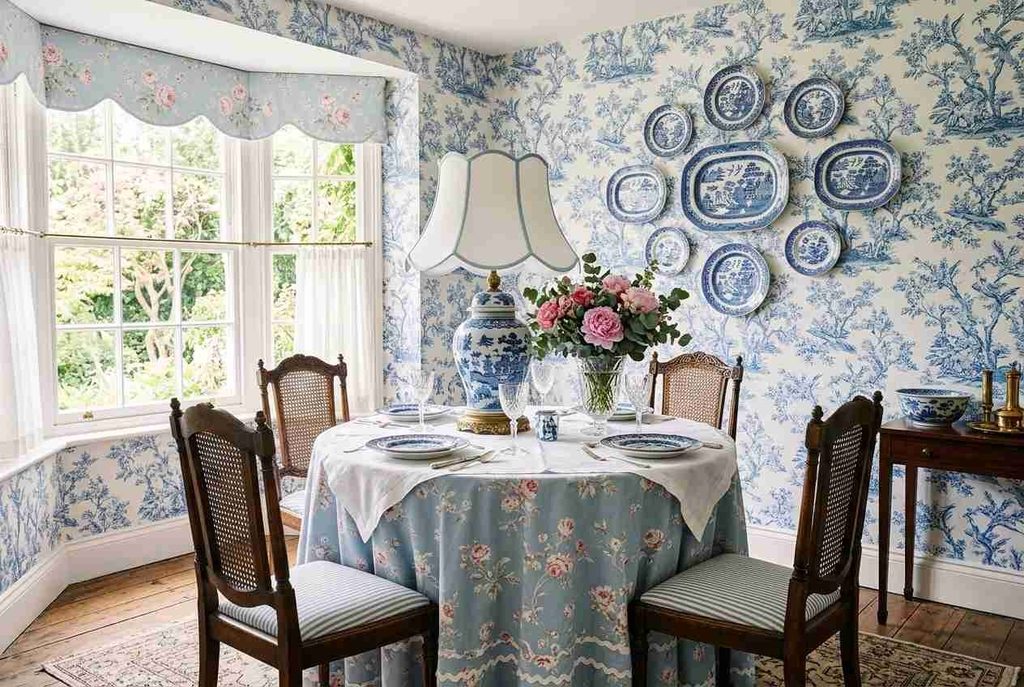
Grandmillennial refreshes your grandmother’s house for younger tastes: skirted tables, pleats, trim, scalloped edges, chintz, chinoiserie, and wallpaper, in either pastels like powder blue and rosy pink or bold colors. The trick is mixing old with new so it feels playful instead of dated.
How to bring it home: A skirted side table (a simple tablecloth does it), a ruffled or scalloped lampshade, a floral or chinoiserie pillow, and vintage glassware from a thrift store. Peel-and-stick wallpaper in a traditional pattern brings the look to a rental wall.
Expressive, Layered, and Global Home Decor Styles
22. Bohemian
Bohemian style revels in layers of color, pattern, and texture, built up gradually into a collected look. Rattan furniture, woven wall hangings, lush plants, vintage-inspired throws, and pillows from everywhere are the ingredients, with pieces gathered over time from thrift stores, antique shops, and travels.
How to bring it home: Start with pillows. A pile of mismatched patterned pillows on the sofa is the fastest, cheapest first step. Add a woven rug, a macrame piece, and plants, then fill in the rest slowly. Statement furniture like a live-edge table can wait. For renters, hanging textiles and plants in baskets need no hardware at all.
23. Eclectic
Eclectic borrows from everywhere, and its appeal lies in unexpected contrasts. But it isn’t throwing everything in at once. The building blocks of design (color, pattern, texture, and shape) tie the room together, and one repeating motif, like a metal finish, a color, or a shape, acts as the thread. Vintage furniture sits beside modern pieces on purpose.
How to bring it home: Choose a thread, then repeat it at least three times in the room: a mustard pillow, a mustard frame, a mustard vase. Anchor the space with one or two solid pieces and sprinkle in surprises from thrift stores. Think of yourself as a host introducing strangers at a party; your job is to find what the pieces have in common.
24. Maximalist
Maximalism is more is more, done on purpose. Bold color, mixed patterns, floor-to-ceiling gallery walls, and displayed collections layer up into a room full of personality. The best examples are intentional, with repeated colors and motifs holding the whole thing together.
How to bring it home: A gallery wall of thrifted frames, a mix of patterned pillows in one color family, and a bold peel-and-stick wallpaper make a good start. Unify it all with a recurring color or one frame finish so it reads joyful instead of chaotic.
25. Moroccan
Moroccan interiors are layered and pattern-rich: mosaics, intricate geometric motifs, metal lanterns, textured walls, arches, bold jewel tones, stacked rugs, plush pillows, and ornately carved wood. The mathematical patterns reflect the ornamental tradition of Islamic art.
How to bring it home: A pouf, a pierced metal lantern, a patterned rug, and peel-and-stick patterned tile for a small backsplash get you the look. Zellige-style handmade tile is trending right now, and affordable tile decals imitate it well enough for a rental kitchen or bathroom.
26. Asian Zen
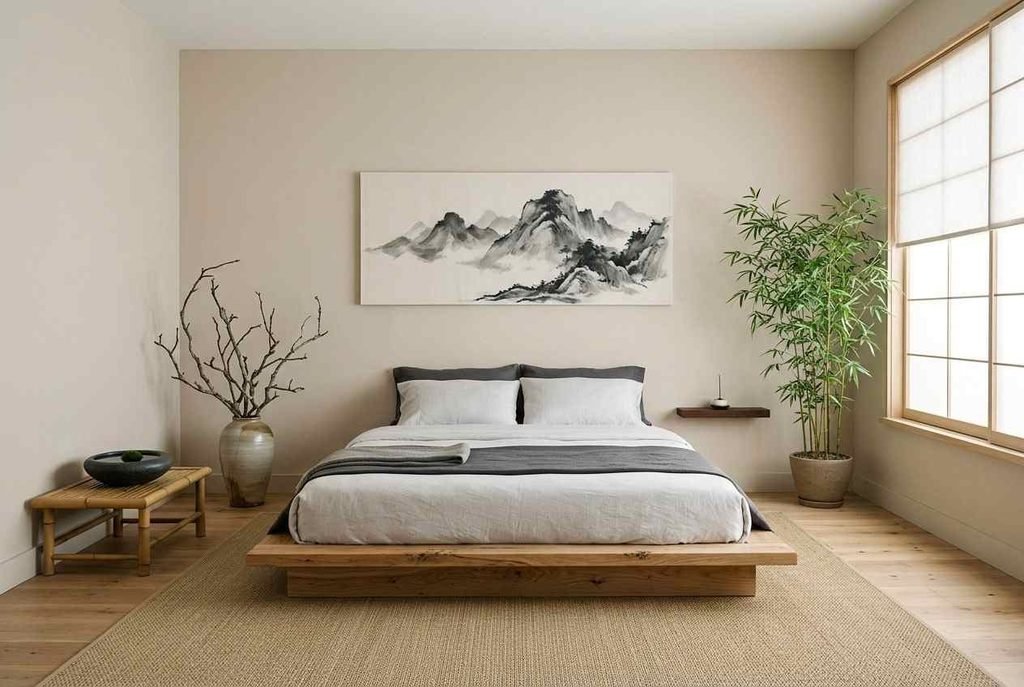
Asian Zen, inspired by design traditions from Japan, China, and Southeast Asia, is a comparatively minimalist look that uses natural fibers, bamboo, and colors drawn from nature to create a serene environment. Furniture stays low with strong horizontal lines, the palette runs through stone, ink black, clay, and sand, and any ornament that appears is deliberate.
How to bring it home: It’s a natural fit for bedrooms and bathrooms, where calm matters most. A bamboo plant, a low table, a paper lantern, weathered branches in a vase, and one large piece of art with plenty of empty wall around it are enough. Keep the palette quiet and resist the urge to add more.
27. Southwestern
Southwestern design blends Native American and Spanish influences: sun-washed colors, tile, exposed ceiling beams, handcrafted items, and bright woven fabrics. Terracotta, rust, turquoise, and cactus green fill the palette, with leather, raw wood, and wrought iron in the furniture.
How to bring it home: A woven blanket in an earthy geometric pattern, terracotta pots with succulents, a leather pouf or ottoman, and handmade pottery. Let the handcrafted pieces be the stars and keep other decor to a minimum.
Coastal and Warm-Climate Home Decor Styles
28. Coastal
Coastal evokes light, breezy living through airy fabrics and a palette of whites, sands, and sea blues. The buttoned-up version is navy and white with gold accents, while the slipcovered beach cottage version is relaxed and comfortable. California chic is its laid-back cousin, with pale blush, weathered leather, and organic neutrals and a touch of desert.
How to bring it home: You don’t have to live near water. Bring in indigo textiles like shibori pillows, a whitewashed coffee table, woven pendants and rattan, and spiky greenery instead of flowers. Skip the lighthouses and anchors, which tip into cliché. A jute rug, white bedding, and striped pillows cover the basics.
29. Mediterranean
Mediterranean interiors draw on the coasts of Spain, Greece, and Italy: arches, warm stone, terracotta, wrought iron, and textured plaster in sandy neutrals mixed with sea blue, olive, and ochre. Furniture may have turned legs and heavy burnished hardware, and rough surfaces like stone and exposed beams sit comfortably next to velvet and linen.
How to bring it home: Terracotta pots, a tile-pattern rug or peel-and-stick tile, wrought iron candleholders, and olive branches in a ceramic jug. Dark-stained wood furniture looks especially dramatic against pale walls and linens, and an intricate rug in sand and clay tones can replace art on the wall.
30. Tropical
Tropical interiors bring the outdoors in with bold palm leaf prints, sunset-bright flowers, sisal and seagrass rugs, grasscloth, wicker, rattan, and bamboo, with pale ceramics balancing rich wood tones. Greens and white dominate. The style had a big moment in the 1980s, and the current version is more edited.
How to bring it home: Botanical prints in simple frames, a rattan chair or basket, a big leafy plant like a monstera or palm, and a bamboo shade. If plants sound like too much upkeep, a peel-and-stick foliage wallpaper on one wall delivers the look. Outdoor-rated print fabrics are sun-resistant and easy to clean, which makes them a smart choice for pillows.
Which Home Decor Style Fits You?
If you’re still stuck between a few, this quick match can narrow it down:
| If you want a room that feels… | Try these styles |
| Calm and uncluttered | Scandinavian, Japandi, Minimalist |
| Cozy and warm | Organic Modern, Modern Farmhouse, Cottage |
| Bold and colorful | Bohemian, Maximalist, Moroccan |
| Polished and classic | Transitional, Traditional, Art Deco |
| Relaxed and breezy | Coastal, Tropical, Mediterranean |
| Raw and moody | Industrial, Rustic |
Home Decor Styles for Each Room
Any style can work anywhere when scaled and styled well, but some pairings suit how we use each room.
Living room: Transitional, modern farmhouse, Scandinavian, contemporary, and organic modern all support conversation and flexibility. Start with an anchor sofa, a rug sized to the seating area, and layered lighting.
Bedroom: Scandinavian, Japandi, Asian Zen, organic modern, coastal, and French country create calm. Keep art low and wide above the headboard so the sightline stays restful.
Dining room: Art Deco, Hollywood glam, Mediterranean, mid-century modern, and traditional make a dining table the star. Statement lighting and symmetry set the tone.
Kitchen: Modern farmhouse, industrial, coastal, Mediterranean, and cottage use materials that handle steam and splashes. Keep art on walls away from the stove and sink.
Entryway: Contemporary, traditional, and eclectic make strong first impressions. A console with a lamp, a mirror, and a tray for keys is enough.
Home office: Minimalist, Scandinavian, and Japandi support focus. Keep the palette restrained and let a plant add life.
Kids’ rooms and nurseries: Cottage, grandmillennial, bohemian, and tropical feel playful and soothing. Choose pieces that are easy to swap as tastes change.
Hallways and stairs: These are great for gallery walls in any style. Keep frame centers on a consistent line as they follow the slope of the stairs.
Small spaces: Minimalist, Scandinavian, Japandi, and modern work especially well, since light colors, low-profile furniture, and multi-use pieces make a small room feel bigger. A large decorative mirror helps too.
How to Choose a Home Decor Style When You Like More Than One
Start with your home’s bones. A rental with white walls and beige carpet is a natural fit for modern, Scandinavian, or transitional looks, while an older building with character can handle traditional or cottage details more easily.
Then think about upkeep and lifestyle. Pets and kids rule out delicate velvet and fragile glass, and a small apartment benefits from low-profile furniture and light colors. Pick a lead style that matches how you live and treat everything else as seasoning.
How to Mix Home Decor Styles Without It Looking Chaotic
Mixing is how most real homes end up looking good. The trick is to set guardrails and repeat them.
- The 70-30 rule. Let one style carry about 70 percent of the room and a second style add the other 30 percent through textures, accents, or contrasting pieces.
- The 60-30-10 rule. Originally a color rule, it works for styles too: 60 percent dominant, 30 percent secondary, and 10 percent a surprising accent.
- Repeat one shared element. A common color, metal finish, or wood tone across the room ties different styles together.
- Stick to one shape language. Mostly curves or mostly angles reduces visual noise.
- Control pattern scale. Use one large pattern, one medium, and one small, then add solids to rest the eye.
- The 3-5-7 rule. Group decor in odd numbers, because three, five, or seven objects look more natural than an even set.
Easy pairings that rarely go wrong: modern with Scandinavian, boho with coastal, industrial with mid-century, farmhouse with rustic, and traditional with contemporary (which is how transitional style was born).
Colors and Materials for Each Style at a Glance
| Style | Typical Colors | Typical Materials |
| Scandinavian | Warm white, soft gray, pale wood tones | Oak, linen, wool |
| Mid-Century Modern | Mustard, olive green, walnut brown | Teak, walnut, leather |
| Industrial | Black, gray, rust | Metal, reclaimed wood, leather |
| Modern Farmhouse | Warm white, cream, black | Shiplap, wood, metal |
| Bohemian | Rust, terracotta, jewel tones | Rattan, woven textiles, macrame |
| Coastal | White, sea blue, sand | Linen, jute, rattan |
| Japandi | Earthy neutrals, sage green | Bamboo, light wood, ceramic |
| Art Deco | Jewel tones, black, gold | Brass, velvet, mirrored glass |
| Organic Modern | Cream, greige, taupe, olive green | Travertine, stone, bouclé |
| Mediterranean | Terracotta, sea blue, warm white | Stone, tile, wrought iron |
A safe starter palette that works with almost any style is warm white walls, a light or medium wood, and soft gray or greige upholstery. Add one accent family such as blues, greens, or rusts, and you can swap pillows and art with the seasons while the big pieces stay put.
Wall Art, Frames, and Gallery Walls for Each Style
Wall art is the fastest shortcut to a style, because the right print can define a room without changing a single piece of furniture. The layout and frame matter as much as the art itself.
| Style Group | Best Gallery Wall Layout | Best Frames |
| Modern, Minimalist, Contemporary | Strict grid with even margins | Thin black or white frames |
| Traditional, Transitional, French Country | Symmetrical pairs or triptychs | Gold, brass, or dark wood frames |
| Bohemian, Eclectic, Maximalist | Organic cluster around one anchor piece | Mixed thrifted frames, kept to one color family |
| Industrial | Bold grid with strong lines | Black metal frames |
| Scandinavian, Japandi, Coastal | Airy spacing with plenty of wall showing | Light wood or white frames |
| Farmhouse, Cottage, Country | Two neat rows or a casual cluster | White and natural wood, mixed |
How to choose picture frames: Stick to one frame finish per wall unless you’re deliberately going eclectic. Add mats to make inexpensive prints look more finished, and match the frame to the material in the room: wood frames beside wood furniture, black frames beside black metal.
How to build a gallery wall that matches your style:
- Choose one theme, such as family photos, travel, nature, or abstract art.
- Edit everything the same way, either all black and white or all color, so the collection reads as one piece.
- Pick the layout from the table above.
- Lay paper templates on the wall with painter’s tape before you hang anything.
- Use five to seven pieces spaced two to three inches apart, and center the arrangement around 57 to 60 inches from the floor.
For more layout ideas and placement tips, the full wall decor guide goes deeper.
How to Get Any Style as a Renter
You don’t need to paint or drill to move toward a style. Peel-and-stick wallpaper, brick, shiplap, and patterned tile give you the look of a wall treatment without damage. Changing lampshades, curtains, and pillow covers shifts a room’s feel quickly. A plug-in swag pendant light replaces a builder-grade fixture without an electrician. Command strips hold lightweight frames, and leaning a large mirror or piece of art against a wall skips the hardware entirely.
Common Home Decor Style Mistakes to Avoid
Hanging art too high or too small. Anchor art to nearby furniture and center it at eye level, around 57 to 60 inches from the floor.
Mixing too many wood tones or metal finishes. Pick one dominant finish and repeat a secondary one in at least three places.
Letting every pattern shout at once. Balance busy prints with solid textiles and calm paint colors.
Going literal with themes. A coastal room full of anchors and lighthouses feels forced. Reference the sea with texture, blues, and sunlight instead.
Displaying everything at once. Shelves packed edge to edge read as clutter. Leave negative space so special pieces stand out.
Skipping layered lighting. One overhead light flattens color and texture. Add dimmable lamps and sconces to set the mood.
Buying a full style set at once. A room furnished from one matching collection looks like a showroom. Mix in a thrifted piece or two.
Where to Go From Here
Once you’ve picked a style, the next question is usually color. The home decor color palette guide shows how to build one that supports your style, and the cohesive theme guide explains how to keep everything feeling connected from room to room. For what’s currently popular, the home decor trends guide covers this year’s biggest looks. And if budget is your main limit, the full guide to decorating on a budget has the step-by-step approach.
Save this guide to your Pinterest board so you can come back to it when you’re shopping.
Frequently Asked Questions
What are the most popular home decor styles? Modern, contemporary, minimalist, Scandinavian, mid-century modern, modern farmhouse, industrial, bohemian, coastal, traditional, and transitional are the styles people run into most often. Organic modern is one of the fastest-rising. Popularity varies by region, so choose the look that matches how you live.
How do I find my home decor style? Save 15 to 30 pins of rooms you love on a Pinterest board, then look for repeating colors, materials, and shapes. Pick three adjectives for how you want the room to feel, and check which pieces you already own and love. The overlap is usually your style.
What is the difference between modern and contemporary design? Modern refers to a specific design movement from the early to mid 20th century, with clean lines and minimal ornament. Contemporary means whatever is current, so it changes over time and often includes softer curves and newer finishes.
Can you mix different home decor styles? Yes. Choose one dominant style and let a second take a smaller share, following the 70-30 or 60-30-10 rule, and tie everything together with a repeating color, material, or shape.
What is the 60-30-10 rule in decorating? It’s a ratio guideline: 60 percent of a room in one dominant color or style, 30 percent in a secondary one, and 10 percent in an accent. It keeps a room balanced without feeling flat.
What is the 3-5-7 rule in decorating? Group decorative objects in odd numbers, such as three, five, or seven, because odd-numbered groupings look more natural and balanced than even ones.
How does the 70-30 rule work in decorating? Seventy percent of the room carries your dominant style or palette, and the other thirty percent adds contrast through textures, accents, or a secondary style.
What is the 3-4-5 rule in interior design? It’s a measuring trick for making a right angle. Measure 3 units along one side and 4 along the other, and the diagonal between those points should measure 5. Designers use it to square up rugs, furniture layouts, and gallery walls.
Which home decor style is best for small spaces? Minimalist, Scandinavian, Japandi, and modern styles work especially well, since light colors, low-profile furniture, and multi-use pieces make a small room feel larger.
What home decor style is most budget-friendly?
Scandinavian, minimalist, cottage, and eclectic styles are the easiest to build on a budget, because they rely on simple pieces, thrifted finds, and mixing what you already own.
________________________________________________________________
What Are the Most Popular Home Decor Styles?
Modern, contemporary, minimalist, Scandinavian, mid-century modern, modern farmhouse, industrial, bohemian, coastal, traditional, and transitional are among the most widely recognized home decor styles. Organic modern is also gaining attention. Popularity varies by region, so choose a style that reflects your lifestyle, personal taste, and practical needs.
How Do I Find My Home Decor Style?
Save 15 to 30 pictures of rooms you love to a Pinterest board, then look for repeating colors, materials, and shapes. Choose three adjectives that describe how you want your room to feel, such as cozy, bright, or elegant. Finally, consider which existing furniture and decor pieces you love. The common elements will help you identify your personal home decor style.
What Is the Difference Between Modern and Contemporary Design?
Modern design refers to a specific design movement that developed in the early to mid-20th century. It emphasizes clean lines, functional furniture, natural materials, and minimal ornamentation. Contemporary design, on the other hand, reflects current trends and evolves over time. It may feature softer curves, mixed materials, and modern finishes.
Can You Mix Different Home Decor Styles?
Yes, you can mix different home decor styles to create a space that feels personal and cohesive. Start with one dominant style and introduce a secondary style through furniture, lighting, artwork, or accessories. Use a shared color palette, repeating materials, or similar shapes to connect the different elements. The 70-30 rule can also help you balance the styles without making the room feel cluttered.
What Is the 60-30-10 Rule in Decorating?
The 60-30-10 rule is a decorating guideline for balancing colors in a room. Around 60 percent of the space uses a dominant color, 30 percent uses a secondary color, and the remaining 10 percent features an accent color. For example, warm white walls, beige furniture, and terracotta accessories can create a balanced and inviting interior.
What Is the 3-5-7 Rule in Decorating?
The 3-5-7 rule is a styling guideline that encourages grouping decorative objects in odd numbers, such as three, five, or seven. Odd-numbered arrangements can create a more relaxed and visually interesting display. Try grouping vases, candles, books, or small decorative accessories on a coffee table, shelf, or console. The rule is a flexible styling tip rather than a strict design requirement.
How Does the 70-30 Rule Work in Decorating?
The 70-30 rule helps balance two decor styles, colors, or design influences in one space. Approximately 70 percent of the room follows the dominant style, while the remaining 30 percent introduces contrast through furniture, textures, patterns, or accessories. For example, a mostly Scandinavian living room can incorporate vintage furniture and colorful artwork for an eclectic touch.
What Is the 3-4-5 Rule in Interior Design?
The 3-4-5 rule is a practical measuring technique used to create a right angle. Measure three units along one side and four units along the adjacent side. The diagonal connecting those points should measure five units. The same principle works with feet, inches, meters, or centimeters. It can help when positioning rugs, planning furniture layouts, or arranging gallery walls, although a measuring tool may still be needed for precise installation.
Which Home Decor Style Is Best for Small Spaces?
Minimalist, Scandinavian, Japandi, and modern home decor styles work particularly well in small spaces. They often use light colors, clean lines, uncluttered layouts, and functional furniture to make rooms feel more open. Choose multi-purpose furniture, use mirrors to reflect light, and take advantage of vertical storage. Keeping accessories intentional can also help a small room feel spacious without sacrificing personality.
What Home Decor Style Is Most Budget-Friendly?
Scandinavian, minimalist, cottage, and eclectic home decor styles can be adapted easily to a limited budget. They allow you to use simple furniture, thrifted finds, secondhand accessories, and pieces you already own. Instead of replacing everything, refresh a room with affordable pillow covers, DIY wall art, rearranged furniture, natural textures, and a few carefully chosen accessories. The most budget-friendly style is one that works with your existing belongings and avoids unnecessary purchases.