


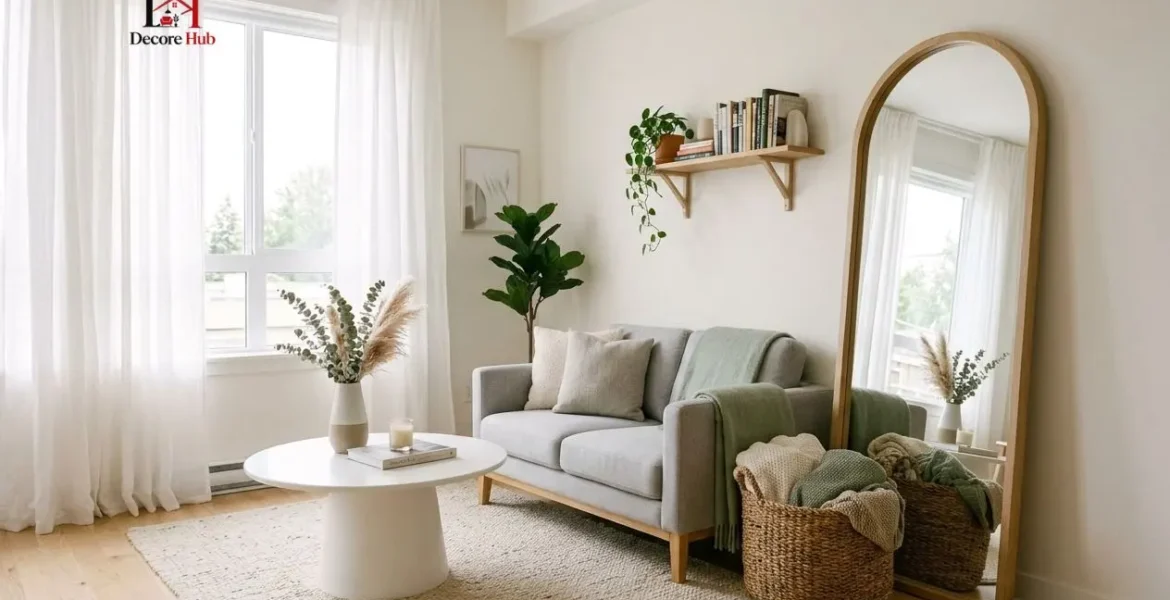
Small Space Decor Ideas: 30 Ways to Style Apartments and Small Rooms
Small space decor ideas come down to five moves: make the room look bigger with light colors, mirrors, and daylight, choose furniture that does more than one job, use walls and height for storage, give every area a clear purpose, and keep surfaces clear. This guide gives you 30 ways to style apartments and small rooms, each with a typical cost and a note on whether it’s safe for a rental.
Most small apartment decorating ideas online fall into two camps. Some are renovation projects, like knocking down a wall or building a loft. The rest are photo galleries with no prices and no mention of a lease. These ideas assume you have a limited budget, maybe a studio, and a landlord who says no to nails. Costs are typical US ballparks and will vary by store and region.
Small Space Decor Ideas at a Glance
Here are all 30 ideas with what each one fixes and what it typically costs. Each is explained in detail below.
| # | Idea | What It Fixes | Typical Cost | Renter-Safe? |
| 1 | Stick to a light, warm color palette | Looks bigger | Free to $60 | Yes, use textiles if you can’t paint |
| 2 | Hang a large mirror across from a window | Looks bigger, more light | $15 to $60 | Yes, lean it |
| 3 | Hang sheer curtains high | Light, height | $15 to $40 | Small holes, ask first |
| 4 | Choose furniture on legs | Looks bigger | Varies | Yes |
| 5 | Try clear or glass furniture | Looks bigger | $30 to $150 | Yes |
| 6 | Use one large piece of art | Focal point | Free to $40 | Yes |
| 7 | Choose multifunctional furniture | Storage, layout | $20 to $120 | Yes |
| 8 | Use a sofa bed, daybed, or Murphy bed | Guests, layout | $150 and up | Murphy beds: ask first |
| 9 | Pick a storage bed | Storage | Free to $200 | Yes |
| 10 | Float your nightstands | Floor space | $15 to $50 | Wall-mounted: ask first |
| 11 | Use storage benches and ottomans | Storage, seating | $25 to $80 | Yes |
| 12 | Choose a round or drop-leaf table | Layout, dining | $40 to $150 | Yes |
| 13 | Go vertical with wall shelves | Storage | $10 to $40 | Floating shelves: ask first |
| 14 | Use the space up to the ceiling | Storage | $20 to $100 | Freestanding: yes |
| 15 | Hide storage in plain sight | Storage, clutter | $5 to $40 | Yes |
| 16 | Organize the closet | Storage | $10 to $40 | Yes |
| 17 | Create an entryway drop zone | Clutter, storage | $10 to $40 | Yes, adhesive hooks |
| 18 | Use rails, hooks, and over-the-door racks | Storage | $8 to $30 | Yes |
| 19 | Define zones with rugs | Layout | $20 to $100 | Yes |
| 20 | Divide a studio with a bookshelf or curtain | Layout, privacy | $30 to $100 | Yes |
| 21 | Keep walkways clear | Layout | Free | Yes |
| 22 | Carve out a reading nook or tiny office | Function | $20 to $80 | Yes |
| 23 | Size furniture to the room | Layout | Varies | Yes |
| 24 | Declutter and edit regularly | Clutter | Free | Yes |
| 25 | Layer lighting with sconces and lamps | Light, coziness | $15 to $60 | Plug-in sconces: yes |
| 26 | Add plants, tall and hanging | Coziness, height | $3 to $30 | Yes, ask before hooks |
| 27 | Layer in texture | Coziness | $10 to $50 | Yes |
| 28 | Use peel-and-stick wallpaper or go dark | Style | $20 to $60 | Test a patch first |
| 29 | Thrift, repurpose, and DIY | Budget | Varies | Yes |
| 30 | Keep personal pieces and edit the rest | Personality | Free | Yes |
Where to Start: Fix the Biggest Problem First
You don’t need all 30. Find the problem that bugs you most and start with those ideas.
| If Your Space… | Start With Ideas |
| Feels dark | 1, 2, 3, 25 |
| Feels cramped | 4, 5, 21, 23, 24 |
| Has nowhere to put things | 13 to 18 |
| Is a studio with no separate areas | 19, 20, 22 |
| Is a rental where you can’t change the walls | 2, 19, 24, 25, 26, 28 |
| Needs help on almost no budget | 21, 24, 29, 30 |
Small Room Decor Ideas That Make a Space Look Bigger
1. Stick to a Light, Warm Color Palette

Typical cost: Free to $60. Renter-safe: Yes, use textiles if you can’t paint.
Light colors bounce daylight around, which is why white, warm white, cream, and greige make a small room look more open than almost anything else you can do. You don’t have to repaint to use the idea. Keep sheets, curtains, throws, and rugs in the same pale family, and let wood and one accent color provide contrast. A tonal room also feels calmer, because fewer colors are competing for attention.
2. Hang a Large Mirror Across From a Window
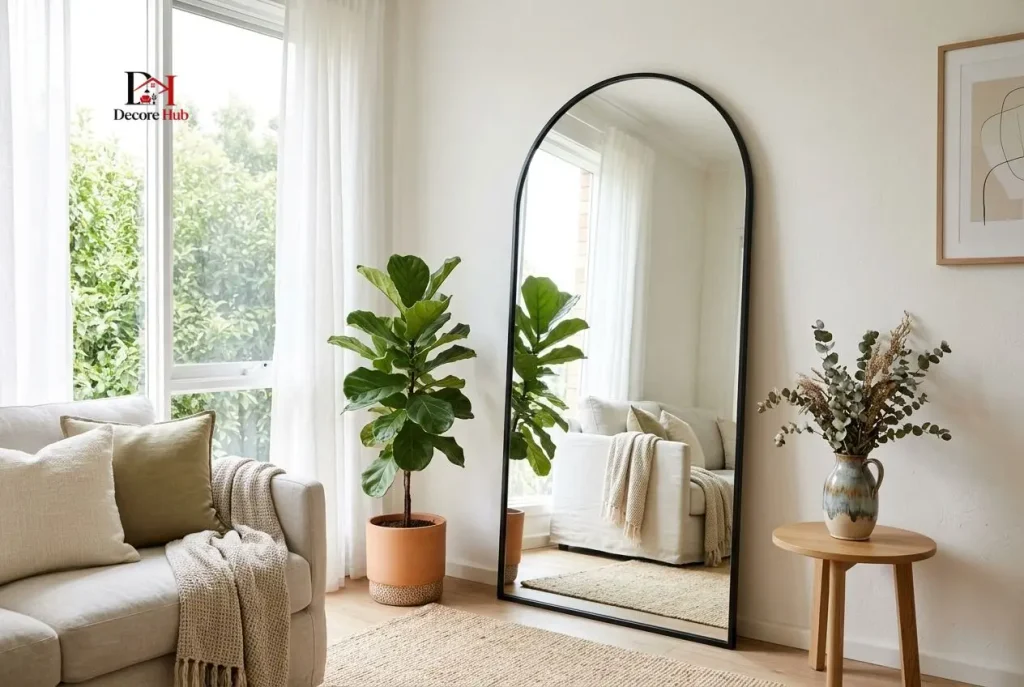
Typical cost: $15 to $60. Renter-safe: Yes, lean it.
A big mirror is the classic small room trick for a reason: it doubles the daylight and gives the eye a second room to look into. Place it across from a window, not facing a pile of clutter, because it will reflect whatever is in front of it. Go as large as the wall allows. Thrifted mirrors are easy to find and a coat of spray paint updates the frame. Leaning a floor mirror against the wall needs no hardware, which is the renter-friendly route.
3. Hang Sheer Curtains High

Typical cost: $15 to $40. Renter-safe: Small holes, ask first.
Natural light does more for a small space than any piece of decor, so don’t block it. Sheer or light linen curtains let the daylight through and still give some privacy. Mount the rod close to the ceiling and extend it past the window frame so the curtains frame the wall, which makes the ceiling look taller. Woven roller shades are a good light-friendly option when you need more privacy. Moving a rod means new screw holes, so ask your landlord or use a tension rod where one fits.
4. Choose Furniture on Legs
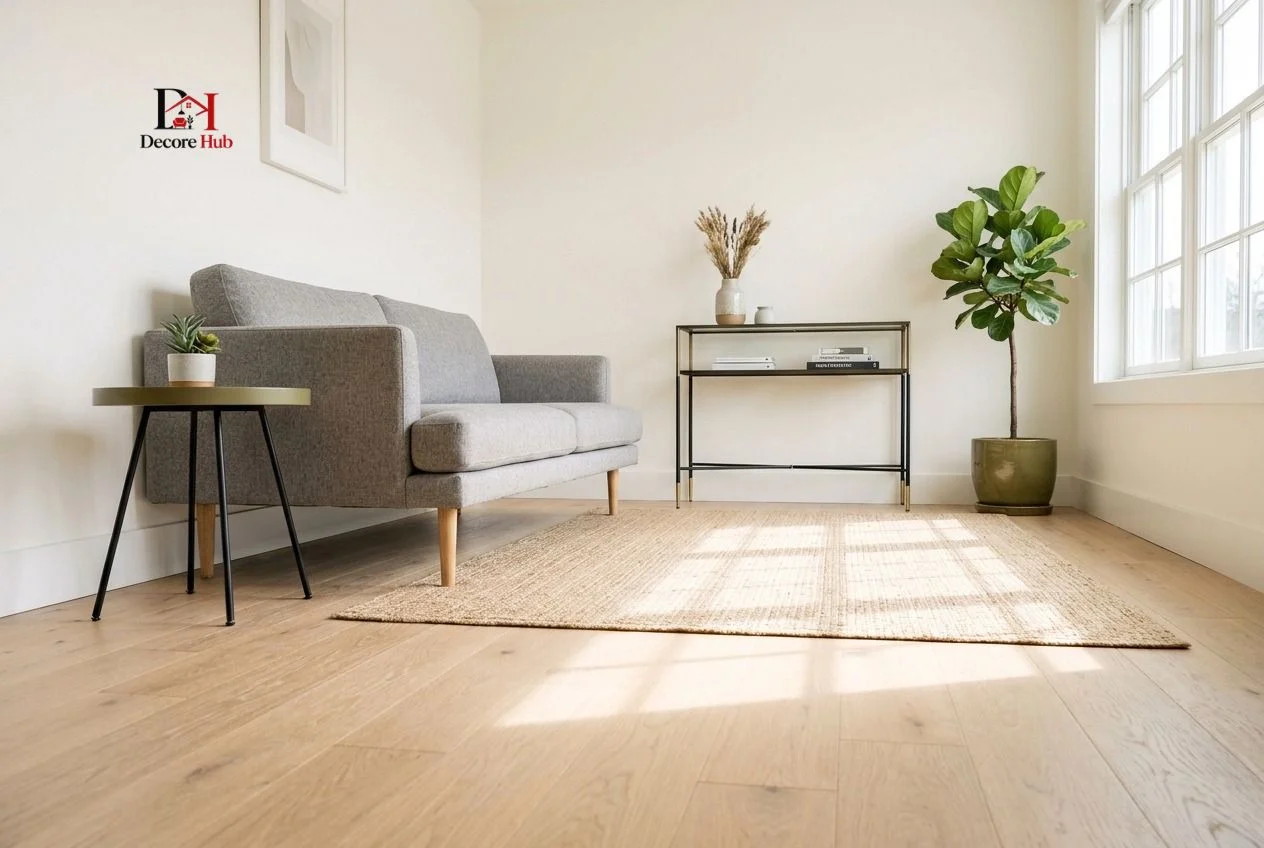
Typical cost: Varies. Renter-safe: Yes.
Pieces on legs let light travel underneath and show more floor, and visible floor reads as more space. Look for sofas, chairs, and consoles with slim legs instead of solid skirts, and keep the profile low so the walls stay visible above. You don’t have to replace what you own. Put the bulkiest piece against the longest wall and make everything around it lighter.
5. Try Clear or Glass Furniture

Typical cost: $30 to $150. Renter-safe: Yes.
Clear furniture takes up physical space but almost no visual space. An acrylic chair, a glass-topped coffee table, or a glass tulip-style table lets the eye travel straight through to the wall behind it. New pieces can cost more than basic furniture, so check secondhand listings, and use one clear piece per room as an accent instead of making it the whole room. Glass shows fingerprints, so keep a cloth nearby.
6. Use One Large Piece of Art

Typical cost: Free to $40. Renter-safe: Yes.
It sounds backwards, but one big piece of art makes a small wall look more intentional than a handful of tiny frames. A large piece creates a focal point that anchors the room, while many small pieces add visual noise. If large art is out of budget, frame a big piece of fabric, print a poster-size free printable, or use a peel-and-stick wallpaper panel as the art (see idea 28). Center it around 57 to 60 inches from the floor and let it fill most of the wall above your sofa.
Furniture for Small Spaces That Works Harder
7. Choose Multifunctional Furniture
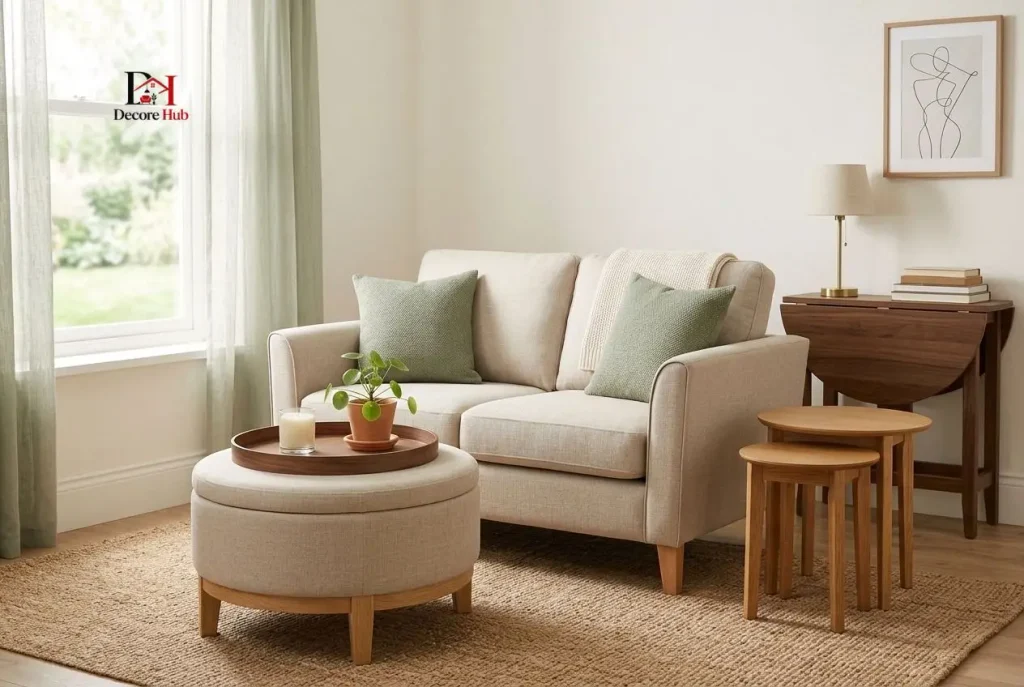
Typical cost: $20 to $120. Renter-safe: Yes.
In a small space, every piece should earn its footprint twice. A storage ottoman can be a coffee table, extra seating, and a blanket box. Nesting tables come out when guests arrive and tuck away afterward. A drop-leaf console turns into a desk or a dining table. Before you buy anything, ask what job it does besides the obvious one. If the answer is nothing, it probably belongs in a bigger room.
8. Use a Sofa Bed, Daybed, or Murphy Bed

Typical cost: $150 and up. Renter-safe: Sofa beds and daybeds, yes. Murphy beds, ask first.
If your place has to host guests or double as a bedroom, choose a bed that doubles as a sofa. A sofa bed or daybed handles seating by day and sleeping by night, and a Murphy bed folds into the wall to free the whole floor. Murphy beds are an investment and need installation, so they mostly suit owners. Sofa beds and daybeds are renter-friendly and turn up secondhand often.
9. Pick a Storage Bed
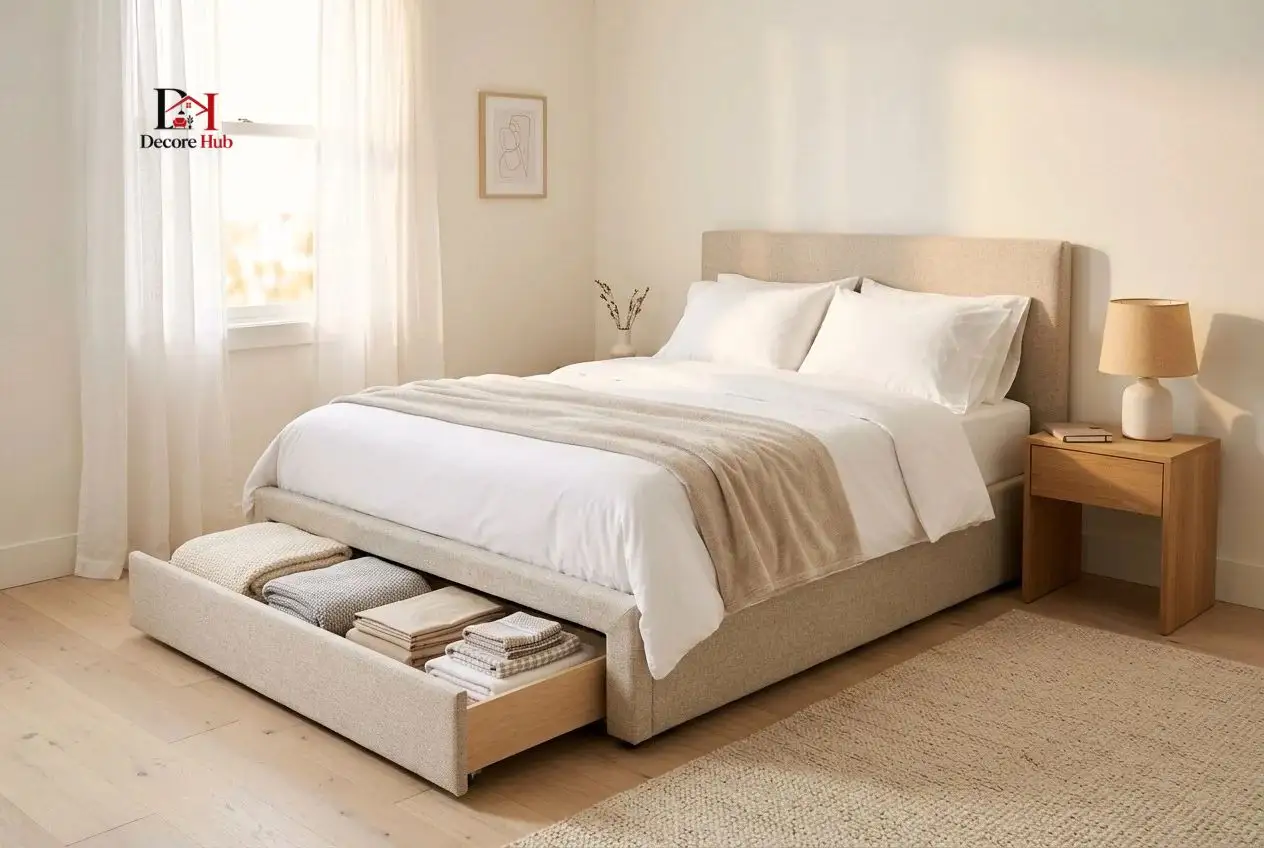
Typical cost: Free to $200. Renter-safe: Yes.
A storage bed works like a second dresser that takes up no extra floor. Beds with drawers or a lift-up base hold blankets, off-season clothes, and shoes. If you don’t want to buy a new bed, bed risers plus flat bins under your current frame give you much of the same space for far less. Pick bins that match so the space looks tidy even if the bedding is short.
10. Float Your Nightstands

Typical cost: $15 to $50. Renter-safe: Wall-mounted, ask first.
A wall-mounted nightstand clears the floor underneath, which makes a small bedroom look bigger and leaves space for a basket or a pair of shoes. Mounting takes a few screws, so renters should ask first. A good no-drill substitute is a very slim table or a small stool with a tray on top. Whatever you choose, keep the top to a lamp, a book, and one personal item.
11. Use Storage Benches and Ottomans

Typical cost: $25 to $80. Renter-safe: Yes.
Benches and ottomans with lift-up lids give you seating and hidden storage in one footprint. Put a bench at the foot of the bed for spare bedding, a small one in the entryway for shoes, or an ottoman by the sofa for remotes and throws. Choose a size that suits the room, because a bench that is too long makes a small room feel tight. Secondhand ones are easy to refresh with a slipcover or new fabric.
12. Choose a Round or Drop-Leaf Table

Typical cost: $40 to $150. Renter-safe: Yes.
Round tables have no corners to bump into and are easier to walk around, which matters when there are two feet between the table and the wall. A pedestal or tulip base leaves legroom, and a drop-leaf folds down to a narrow strip when you aren’t eating. A small round table also works as a desk, a nightstand, or a side table. Pair it with two chairs and a stool you can tuck away.
Small Space Storage Ideas
13. Go Vertical With Wall Shelves

Typical cost: $10 to $40. Renter-safe: Floating shelves, ask first.
When floor space runs out, go up. Wall-mounted shelves add storage without using any floor, and high shelves pull the eye upward, which makes the ceiling feel taller. Keep what you use daily at arm’s reach and save the top shelves for things you use rarely. Floating shelves need drilling, so renters should ask first or choose a tall, slim freestanding bookcase instead. Secure any tall piece with an anti-tip strap for safety.
14. Use the Space Up to the Ceiling

Typical cost: $20 to $100. Renter-safe: Freestanding units, yes. Built-ins, ask first.
The gap between the top of your furniture and the ceiling is wasted in most small rooms. Run shelves or cabinets all the way up, add a shelf above a doorframe, or stack baskets on top of a wardrobe for out-of-season items. Taking storage to the ceiling also makes the room feel taller. In a rental, tall freestanding units and over-the-door shelves are the safe choices, while built-ins are better left to owners.
15. Hide Storage in Plain Sight

Typical cost: $5 to $40. Renter-safe: Yes.
The best small space storage doesn’t look like storage. Lidded baskets, cabinets with doors, storage ottomans, and bins under the bed or sofa keep belongings out of sight so surfaces stay clear. Choose containers in the same color or material so they read as decor. A matching set of baskets on a shelf looks styled, while a mix of random plastic boxes looks like clutter even when it’s organized.
16. Organize the Closet

Typical cost: $10 to $40. Renter-safe: Yes.
In a small apartment the closet is often the only real storage, so make it work harder. Add a second hanging rod to double the hanging space, use slim matching hangers, put bins on the shelf above, and hang an organizer on the back of the door for shoes or accessories. Rotate seasonal clothes into under-bed boxes so the closet only holds what you wear now. None of this needs tools.
17. Create an Entryway Drop Zone

Typical cost: $10 to $40. Renter-safe: Yes, with adhesive hooks or a freestanding rack.
Clutter often starts at the door. Give keys, bags, and shoes a landing spot: a rack with hooks, a slim bench with baskets underneath, and a tray for keys. A basket by the door contains seasonal items like hats and gloves. Adhesive hooks handle light items, and a freestanding coat rack skips wall damage entirely.
18. Use Rails, Hooks, and Over-the-Door Racks

Typical cost: $8 to $30. Renter-safe: Yes.
Walls and doors are free storage. A rail along the kitchen backsplash holds utensils, mugs, and small pots on hooks, which frees up drawers. An over-the-door rack takes towels in the bathroom or bags in the entry. In a small bathroom, add a shelf above the toilet or a narrow rolling cart that tucks beside the vanity. Most of these hang from adhesive or over-the-door hardware, which suits renters.
Layout Ideas for Small Apartments and Small Rooms
19. Define Zones With Rugs

Typical cost: $20 to $100. Renter-safe: Yes.
In a studio or open-plan apartment, a rug is a wall you can walk on. Put one rug under the seating area so the sofa and chair sit on it, and a smaller one under the dining table or desk. Each rug signals a separate purpose, which makes one big room feel like several organized ones. Keep the rugs in the same color family so the zones feel connected, and make sure at least the front legs of the furniture rest on the rug.
20. Divide a Studio With a Bookshelf or Curtain

Typical cost: $30 to $100. Renter-safe: Yes.
A bookshelf makes a good room divider because it separates areas and adds storage in one move. Choose an open-backed one so light can still pass through. For a lighter touch, hang a curtain from a ceiling track or tension rod to close off a sleeping area, which also adds a bit of privacy. A folding screen is another cheap, flexible option. Freestanding shelves and curtains keep the floor plan changeable, which suits a rental.
21. Keep Walkways Clear

Typical cost: Free. Renter-safe: Yes.
A room can have the right furniture and still feel cramped if you have to squeeze around it. Aim for a clear path from the door through the room, and try floating a piece slightly off the wall to see which arrangement opens things up. Measure before you move anything, and leave enough room to walk without turning sideways. If a piece blocks the main path, it’s either in the wrong spot or the wrong size.
22. Carve Out a Reading Nook or Tiny Home Office
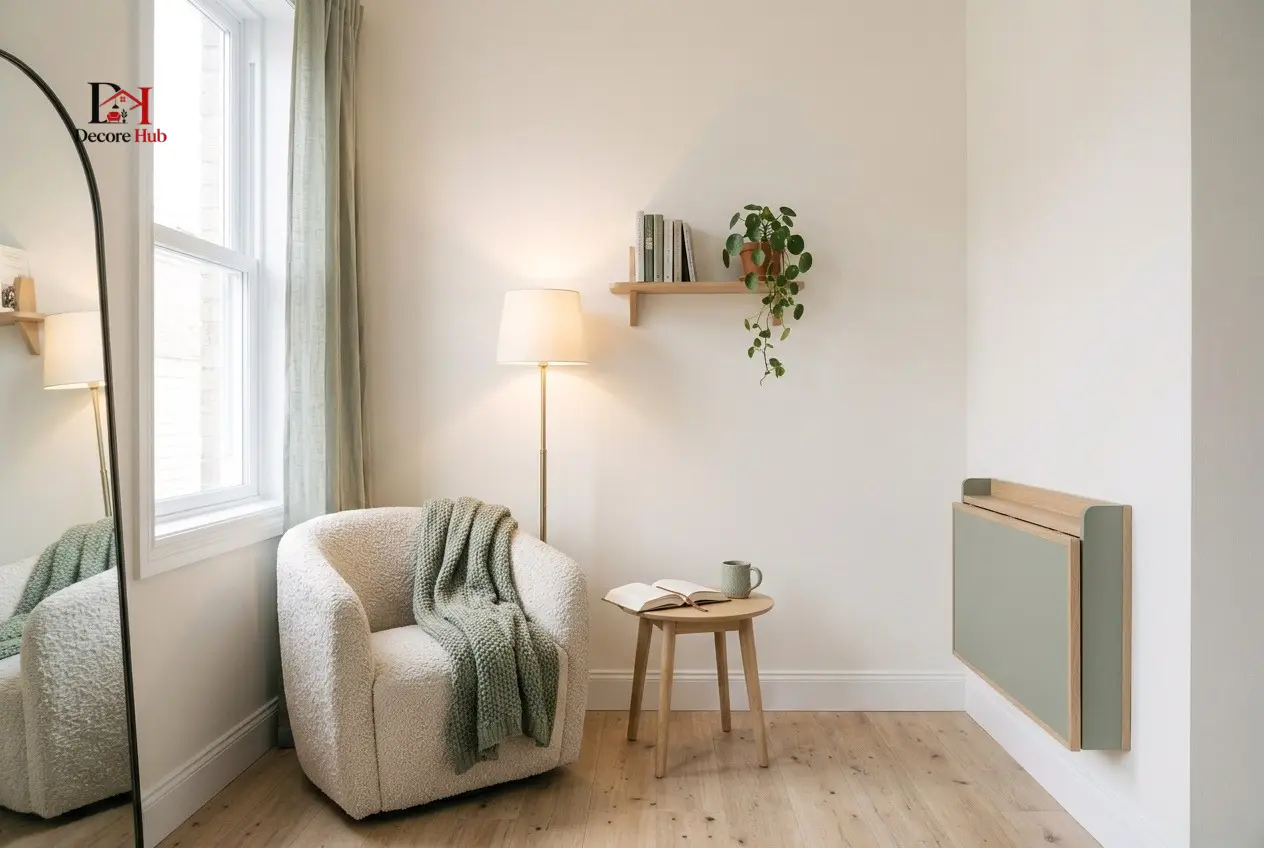
Typical cost: $20 to $80. Renter-safe: Yes.
Odd corners, window alcoves, and the space beside a bookshelf can each become a purpose-built spot. A comfortable chair, a small side table, and a lamp turn a corner into a reading nook, and a narrow desk or fold-away wall desk turns the same footprint into a tiny home office. Giving a spot a job also makes it easier to keep tidy, because everything has a place.
23. Size Furniture to the Room

Typical cost: Varies. Renter-safe: Yes.
A small space doesn’t have to mean tiny furniture. Several small pieces scattered around a room can look cluttered, while one right-sized sofa with fewer pieces around it often looks calmer. Choose an apartment-sized sofa or a loveseat, a slim chair, and a small table, and measure the room, including doorways and stairwells, before you buy. Keep the biggest piece in proportion to your longest wall.
24. Declutter and Edit Regularly

Typical cost: Free. Renter-safe: Yes.
Nothing makes a small space feel smaller than visible clutter. Clear one surface at a time, keep only what you use or love, and follow a one-in, one-out rule for decor. In a small room, groups of two or three objects look better than a crowd. Edit every few months, because a small room fills up faster than you notice. This one is free, and it works in every room.
Style, Light, and Cozy Details for Small Spaces
25. Layer Lighting With Sconces, Pendants, and Lamps

Typical cost: $15 to $60. Renter-safe: Plug-in sconces, yes. Hardwired fixtures, ask first.
Light is the quickest way to make a small, dim space feel larger. Combine a table lamp, a floor lamp, and a wall sconce or pendant so no corner stays dark. Plug-in wall sconces give you wall-mounted light without any wiring, which suits a rental, and a plug-in pendant can replace a harsh ceiling fixture. Lights on the wall also free up the table and floor space a lamp would take. Choose warm white bulbs for a cozy feel.
26. Add Plants, Tall and Hanging

Typical cost: $3 to $30. Renter-safe: Yes. Ask before installing ceiling hooks.
Tall, slim plants take up very little floor, and trailing plants on a high shelf add greenery without using any floor at all. A hanging plant takes up exactly zero floor space. Match the plant to the light you have: snake plants and pothos tolerate low light. If hooks are off the table, put trailing plants on top of a bookcase or tall cabinet. Realistic faux plants work just as well and never need watering.
27. Layer in Texture

Typical cost: $10 to $50. Renter-safe: Yes.
A small room feels cozy instead of cramped when it has texture. Combine a knit throw, a linen curtain, a jute or wool rug, a woven basket, and a few pillows in different fabrics. Texture lets you keep a light, calm palette without the room feeling flat. Keep the colors close and vary the materials, and the room will feel layered without needing any extra furniture.
28. Use Peel-and-Stick Wallpaper or Go Dark on Purpose

Typical cost: $20 to $60. Renter-safe: Wallpaper, test a patch first. Paint, ask first.
Designers disagree about dark colors in small rooms. Some say light colors make a space feel bigger, and others say deep blues and greens turn a small room into a cozy retreat. Both can be right, as long as you commit. If you want a bold wall, a peel-and-stick wallpaper panel behind the bed or in a nook gives you the look without painting, and it comes off when you leave. Test a hidden patch first, since adhesion varies. If you own, one deep paint color on one wall works too.
29. Thrift, Repurpose, and DIY

Typical cost: Varies. Renter-safe: Yes.
Small spaces can’t absorb impulse buys, which is a good reason to be picky and shop secondhand. Thrift stores, garage sales, and Facebook Marketplace turn up slim solid wood furniture, mirrors, lamps, and art at low prices. A coat of paint, new hardware, or a new shade turns a find into something that fits. DIY projects like painted frames, a simple shelf, or a crate used as a side table add personality for close to nothing.
30. Keep Personal Pieces and Edit the Rest
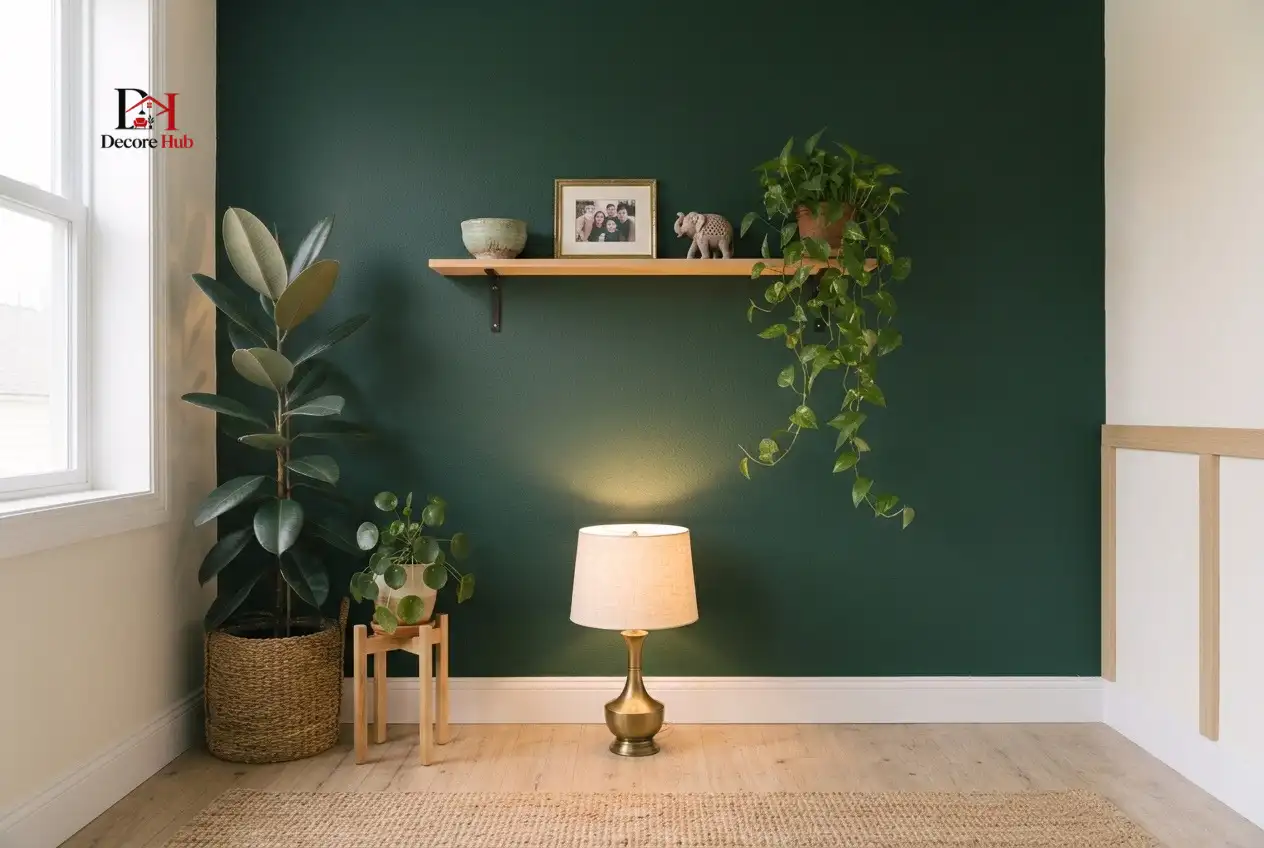
Typical cost: Free. Renter-safe: Yes.
A small space still needs to feel like yours. Pick a few things you love, such as a framed photo, a handmade bowl, or art from a trip, and give them room to be seen. Edit the rest. A handful of meaningful objects makes a small room feel personal instead of staged. And decorate slowly: a small room is better furnished one thoughtful piece at a time than in a single shopping trip.
Small Space Decorating Ideas by Room
The ideas above work in any small room. Here is how they apply to each space.
Small Living Room Decorating Ideas
Choose a loveseat or apartment-sized sofa, a round or nesting coffee table, and one large piece of art. Float the seating slightly off the wall if the layout allows, put a mirror across from the window, and layer a floor lamp with a table lamp. The small living room guide covers layouts and furniture sizes in more detail.
Small Bedroom Decor Ideas
Use a storage bed or under-bed bins, slim or floating nightstands, curtains hung high, and one large piece of art above the bed. Keep the palette tonal and each nightstand to two or three items. The small bedroom guide walks through this room in more detail.
Small Kitchen Decorating Ideas
Add a rail on the backsplash for utensils and mugs, take shelves or cabinets up toward the ceiling, and keep counters mostly clear apart from a cutting board and one plant. A peel-and-stick backsplash adds style in a rental. The budget kitchen guide has more ideas.
Small Bathroom Decor Ideas
Choose a sink with open space underneath if you can, add glass or open shelves, use baskets for towels and an over-the-door rack for extras, and put good lighting near the mirror. Bold wallpaper in a small bathroom is a low-risk way to try a statement look. The small bathroom guide goes deeper.
Small Entryway Ideas
Hooks, a slim bench with baskets, a mirror, and a tray for keys do the whole job. Keep the floor clear so the entry never feels crowded.
Studio Apartment Decorating Ideas
Use rugs to mark zones, a bookshelf or curtain to separate sleeping from living, and furniture that does double duty. Keep the palette consistent across zones so the space still reads as one room. The studio apartment guide has detailed layouts.
Small Apartment Decorating Ideas for Renters
Most of these small apartment decorating ideas need no permission at all. For the ones that do, here is the renter-safe checklist:
• Lean mirrors and large art against the wall instead of hanging them.
• Use peel-and-stick wallpaper in small areas, and test a hidden patch first.
• Swap in plug-in sconces and plug-in pendant lights instead of changing hardwired fixtures.
• Choose freestanding shelves with anti-tip straps, and use tension rods for curtains and dividers.
• Use adhesive hooks for light items.
• Swap hardware and keep the originals in a labeled bag.
• Get written permission before painting or drilling, and keep a list of every hole so you can patch it.
How to Decorate a Small Space Step by Step
If you want a simple order to follow, this works for any small room:
1. Measure the room, the doorways, and the walkways, and list the three things that bother you most.
2. Declutter before you buy anything.
3. Pick a light, warm palette and fix the lighting.
4. Choose furniture that fits the room and does more than one job.
5. Add storage, starting with vertical space and hidden storage.
6. Define zones with rugs and keep the walkways clear.
7. Add plants, texture, and personal pieces slowly.
Small Space Decorating Mistakes to Avoid
Buying lots of small pieces. Many tiny items look cluttered. A few well-sized pieces look calmer.
Blocking natural light. Heavy, dark curtains shrink a room. Choose sheer or light fabrics.
Ignoring vertical space. Walls and the area near the ceiling are the cheapest storage you have.
Skipping layered lighting. One overhead light flattens a small room. Add lamps and sconces.
Over-decorating surfaces. In a small room, a few grouped objects beat a crowd.
Buying before measuring. Measure the room, the doorway, and the path to the room before ordering furniture.
Assuming light is the only option. A deep color can make a small room cozy if you commit to it.
Where to Go From Here
Once you’ve picked a few ideas, the room guides go deeper. The small living room guide covers the most-searched small room, the small bedroom and small bathroom guides cover storage and layout for those spaces, and the studio apartment guide helps when one room has to do everything. If budget is the limit, the budget home decor ideas guide has costs and plans, and the seasonal storage guide shows how to store decor in a small space. The full home decor ideas guide ties everything together.
Save this list for your next weekend project.
Frequently Asked Questions
How do I decorate a small space?
Start by decluttering and measuring, then choose a light palette, fix the lighting, and pick furniture that fits the room and does more than one job. Add storage with vertical space and hidden storage, define zones with rugs, and finish with plants, texture, and a few personal pieces.
How can I make a small room look bigger?
Use light colors, hang a large mirror across from a window, hang sheer curtains close to the ceiling, and choose furniture on legs so the floor shows. Keeping surfaces clear and walkways open also makes a small room feel larger.
What colors make a small space look bigger?
White, warm white, cream, and greige make a small space look more open because they reflect light. Keeping the walls, curtains, and big furniture in the same light family helps the room feel calm and uncluttered.
Can you use dark colors in a small room?
Yes, if you commit to them. Deep blues and greens can make a small room feel cozy and rich, especially with warm lighting. Renters can try the look with a peel-and-stick wallpaper panel instead of paint.
What is the best furniture for a small space?
Pieces that do more than one job and fit the room: storage ottomans, sofa beds or daybeds, round or drop-leaf tables, storage beds, and furniture on slim legs. Choose a few right-sized pieces instead of many small ones.
How do I decorate a small apartment on a budget?
Start with the free ideas: declutter, rearrange, and clear walkways. Then add a lamp, a large mirror, and a plant, and shop thrift stores and Facebook Marketplace for slim solid wood furniture, mirrors, and lamps.
How can renters decorate a small apartment?
Lean mirrors and art against the wall, use peel-and-stick wallpaper, add plug-in sconces and lamps, use freestanding shelves, and divide spaces with curtains or bookcases. Keep original hardware if you swap it, and ask before painting or drilling.
How do you add storage to a small space without drilling?
Use freestanding bookcases, storage ottomans and benches, bins under the bed, over-the-door racks, adhesive hooks, and a second rod in the closet. Tall, slim units use vertical space without touching the walls.
Are mirrors good for small rooms?
Yes. A large mirror placed across from a window doubles the daylight and makes a room feel bigger. Avoid placing it where it reflects clutter.
How do you decorate a studio apartment?
Use rugs to define zones, a bookshelf or curtain to separate the sleeping area, and furniture that does double duty. Keep the color palette consistent across the whole space so it still feels like one room.
