


Home Decor Styles Guide: 30 Popular Styles and How to Get the Look
Home decor styles are recognizable ways of decorating, each built on a consistent mix of colors, materials, furniture shapes, and patterns. The ones you’ll run into most often are modern, contemporary, minimalist, Scandinavian, mid-century modern, modern farmhouse, industrial, bohemian, coastal, and traditional, while organic modern is one of the fastest-rising styles of recent years.
Most style guides show you gorgeous rooms and leave you to work out how to afford them. This one walks through 30 interior design styles and pairs every one with a way to get the look on a budget or in a rental, because most of us are working with a few pieces we already own and a landlord who says no to nails.
Key Takeaways
- There are 30 main types of home decor styles, and they group naturally by mood: clean and modern, classic and glam, farmhouse and cottage, layered and global, and coastal and tropical.
- Most real homes mix two or three styles. A simple ratio like 70-30 or 60-30-10 keeps the mix looking planned.
- To find your style, save 30 to 50 pins of rooms you love and look for repeating colors, materials, and shapes.
- Every style below includes a budget or renter-friendly way to get the look, using peel-and-stick products, thrifted pieces, and textiles.
Different Types of Home Decor Styles: The Quick List
Here is the full home decor styles list at a glance. Each one is explained in detail further down.
| # | Style | Known For |
|---|---|---|
| 1 | Modern | Clean lines, no ornament, neutral base with a color pop |
| 2 | Contemporary | Whatever is current: soft curves, greige, bouclé |
| 3 | Minimalist | Fewer things, tonal palette, texture over pattern |
| 4 | Scandinavian | Light, cozy, functional, pale wood |
| 5 | Mid-Century Modern | Tapered legs, teak, warm retro colors |
| 6 | Japandi | Japanese calm meets Scandinavian function |
| 7 | Organic Modern | Warm neutrals, stone, curves, plants |
| 8 | Industrial | Exposed brick, metal, reclaimed wood |
| 9 | Traditional | Symmetry, dark wood, classic patterns |
| 10 | Transitional | Traditional shapes in a neutral contemporary room |
| 11 | French Country | Faded colors, toile, distressed finishes |
| 12 | Arts and Crafts | Handmade, honest materials, earthy palette |
| 13 | Art Deco | Geometric glamour, brass, jewel tones |
| 14 | Hollywood Glam | Mirrors, velvet, lacquer, high contrast |
| 15 | Modern Farmhouse | Shiplap, white walls, black accents, wood |
| 16 | Rustic | Raw wood, stone, cabin warmth |
| 17 | Country | Gingham, wicker, handmade charm |
| 18 | Cottage | Florals, soft colors, a collected look |
| 19 | Shabby Chic | Distressed white, pastels, slipcovers |
| 20 | Americana | Quilts, braided rugs, folk art |
| 21 | Grandmillennial | Chintz, skirts, scallops, old meets new |
| 22 | Bohemian | Layered textiles, plants, rattan |
| 23 | Eclectic | Mixed eras tied together by one thread |
| 24 | Maximalist | Bold color, pattern, and collections |
| 25 | Moroccan | Jewel tones, lanterns, tile, arches |
| 26 | Asian Zen | Calm, natural, low and simple |
| 27 | Southwestern | Terracotta, turquoise, woven textiles |
| 28 | Coastal | White, sand, sea blue, linen |
| 29 | Mediterranean | Terracotta, arches, stone, wrought iron |
| 30 | Tropical | Leafy prints, rattan, bamboo |
How to Find Your Home Decor Style First
Reading 30 descriptions in a row can make everything sound appealing. A faster way to find your own is to look at what you already respond to.
- Build a Pinterest board: Save 15 to 30 rooms you love without overthinking it.
- Look for repeats: Scroll back through and notice the colors, textures, and shapes that keep showing up.
- Pick three adjectives: Calm, cozy, bold, polished, airy. Test every purchase against them.
- Check what you already own: Which pieces would you keep if you moved tomorrow?
- Choose a lead style and a supporting style: One does most of the work, the other adds personality.
Then factor in how you actually live. Pets, kids, a small apartment, and a lease that bans drilling all shape which styles will work in real life, not just in photos.
Modern vs Contemporary: The Difference People Mix Up
These two get used as if they mean the same thing, but they don’t. Modern is a specific design movement that took shape in the early to mid 20th century. Contemporary simply means what’s being designed and decorated right now, so it keeps changing.
| Modern | Contemporary | |
|---|---|---|
| Meaning | A fixed historical style | Whatever is current |
| Lines | Straight, clean, geometric | Clean, with more curves and softness |
| Palette | Neutral base with deliberate color pops | Soft neutrals like greige, taupe, + current accents |
| Materials | Metal, glass, smooth wood | A mix of natural textures and sleek finishes |
| Changes over time? | No | Yes |
Modern, Minimal, and Urban Home Decor Styles
1. Modern
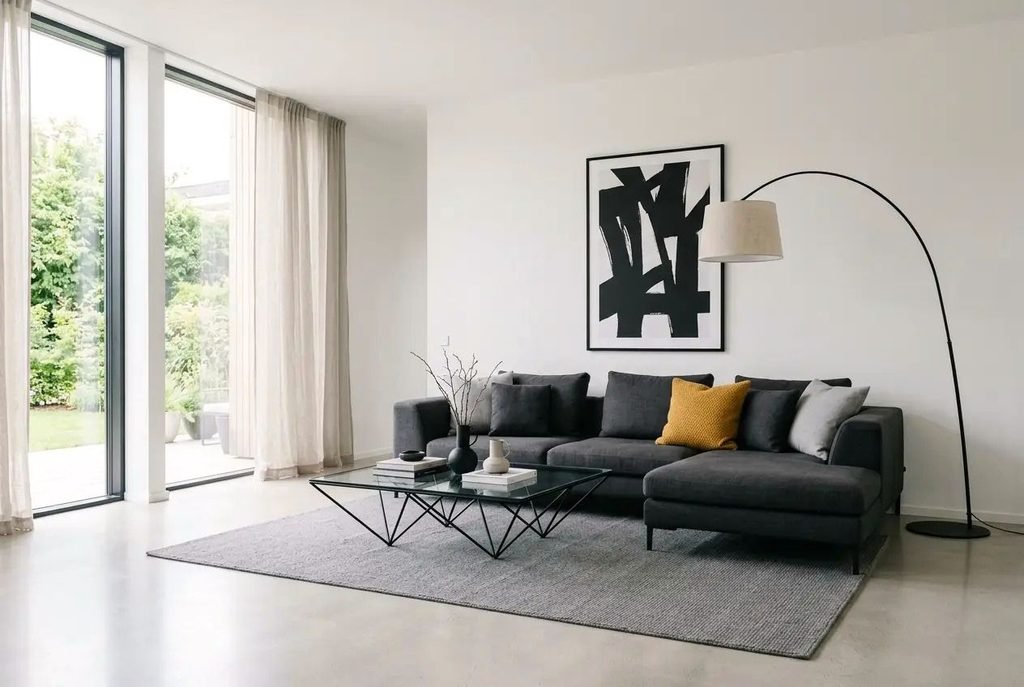
Modern design took shape in the early to mid 20th century, built on the idea that a room should be honest about its materials and free of decoration for decoration’s sake. Expect a neutral palette of white, cream, gray, and black, polished surfaces, strong geometric shapes, and furniture that sits low on simple frames. Glass, metal, and smooth wood do most of the talking, and a single bold color shows up on purpose, never by accident.
How to bring it home: Modern works best in rooms with a clear job, like a kitchen or media room, where pared-back and easy to clean is a real advantage. Clear your surfaces, choose a sofa with plain lines, and let one large abstract print supply the color. On a budget, look for plain-lined wood or metal pieces on Facebook Marketplace and skip anything with decorative hardware. Renters can get the look with thin black frames, a neutral rug, and lamps with simple geometric bases.
2. Contemporary
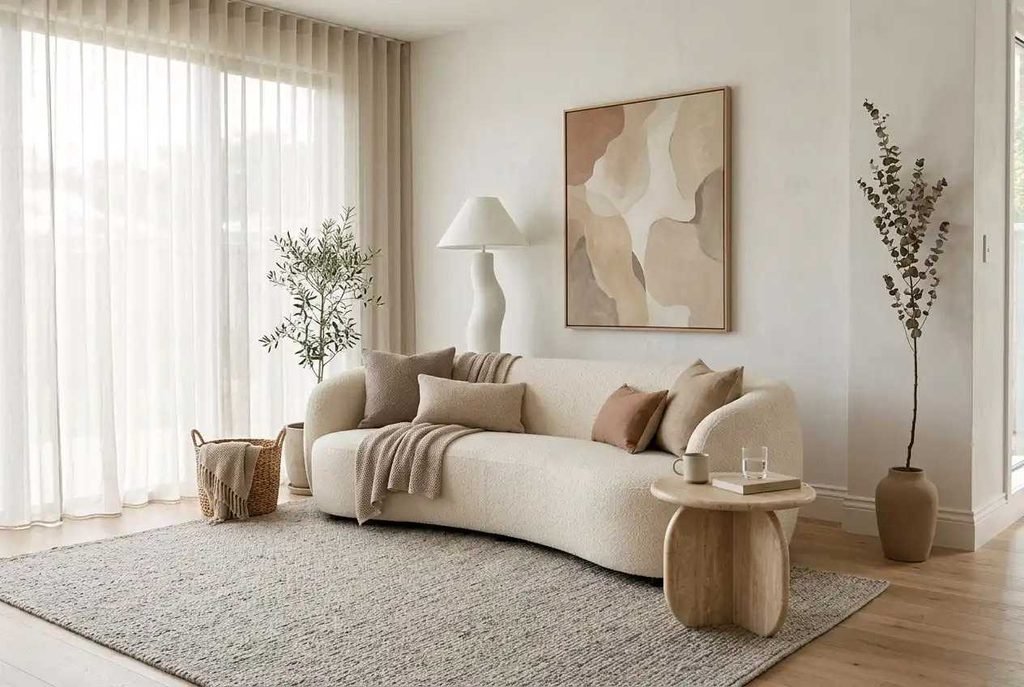
Contemporary is the style of right now, which means it never quite holds still. Today it pairs clean, sleek lines with curves, uses solid blocks of color in muted neutrals like warm white, greige, and taupe (or one confident bright), and keeps furniture low with straight legs or metal frames. Texture does the heavy lifting: bouclé, linen, and a mix of matte and metallic finishes. Graphic art or a sculptural lamp is usually the finishing touch.
How to bring it home: Start by editing. Pull out anything fussy, then add one rounded piece, like a curved side table or a bouclé accent chair, to take the edge off. Hold your palette to two or three neutrals and echo one accent color in a pillow, a rug stripe, and a piece of art so the room feels planned. A bouclé pillow cover and one oversized abstract print are the cheapest way to update an existing room.
3. Minimalist
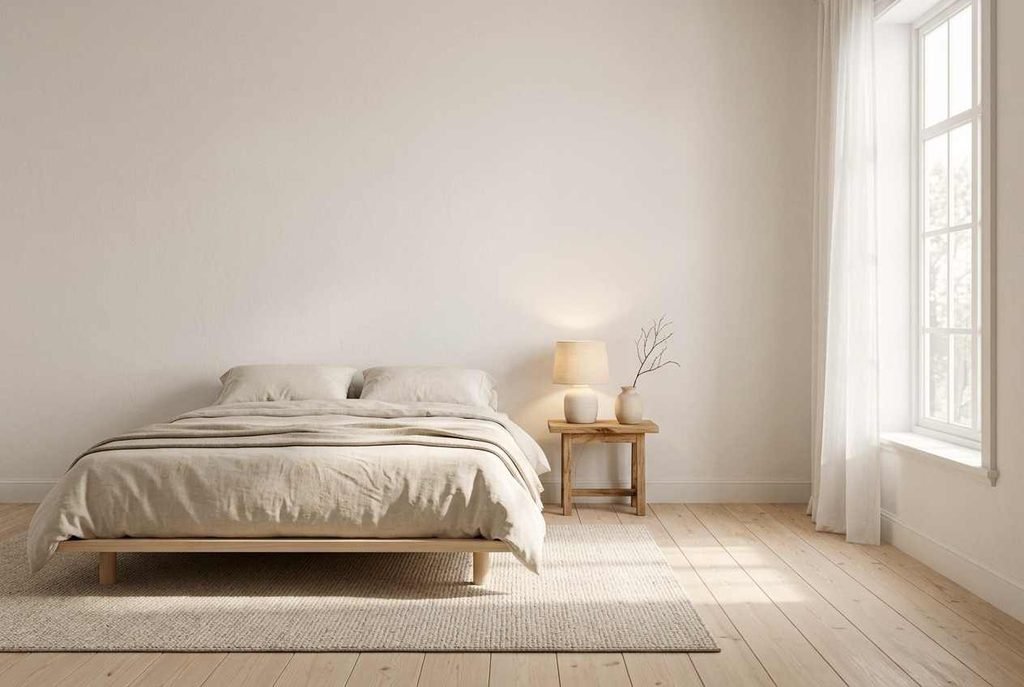
Minimalism is about intention. Every piece in the room has a job, storage is tucked away, and empty space is treated as part of the design instead of something to fill. The palette stays monochrome or softly tonal, texture replaces pattern, and silhouettes stay simple. It’s calm without being cold as long as you include natural materials like linen and wood.
How to bring it home: The cheapest minimalist upgrade is subtraction. Declutter first, then hold off buying anything until the room has been bare for a week and you can see what is actually missing. Use bedding in a single color, keep two or three objects per surface, and leave one wall empty on purpose. In a small apartment this style is especially forgiving, because less stuff means more visible floor and a bigger-feeling room.
4. Scandinavian
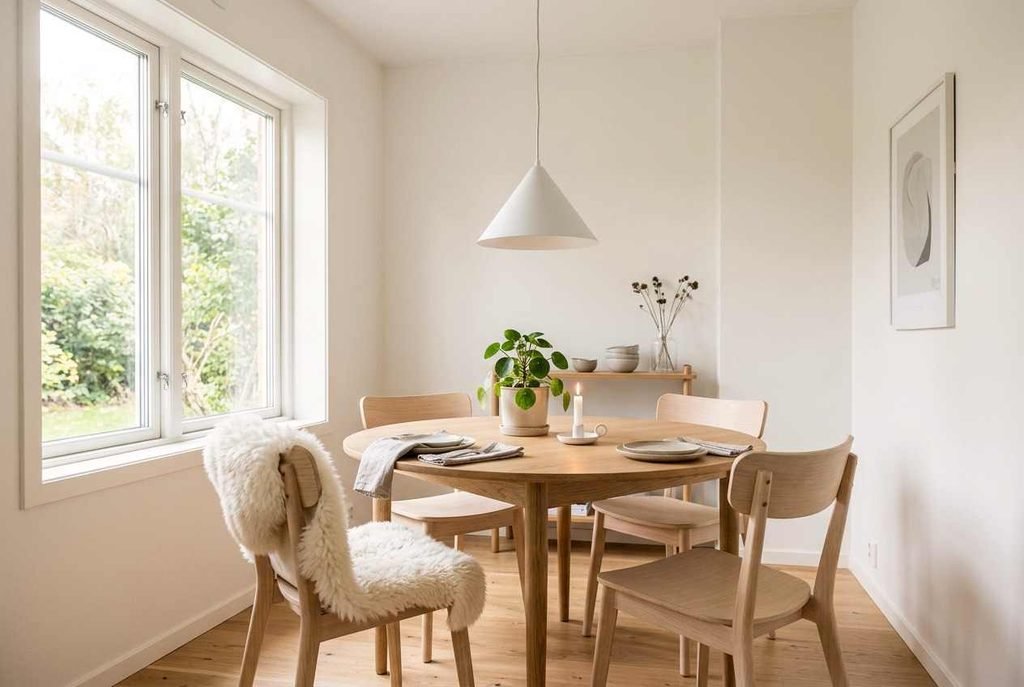
Inspired by Norway, Sweden, and Denmark, Scandinavian design values simplicity and function over decoration, and it makes the most of scarce winter daylight. Walls are white or warm white, floors and furniture are pale wood like oak and birch, and clean-lined pieces stand on tapered legs. Woven textiles, sheepskin, candles, and plants add the coziness the Danes call hygge.
How to bring it home: Keep windows as bare as privacy allows so light gets in, then layer lamps for the evening. A white or cream duvet, a woven basket, a few candles, and one plant covers most of the look for very little money. Affordable retailers like IKEA lean heavily into this aesthetic, and thrifted light-wood pieces mix in easily. Resist the urge to over-treat every surface; this style is at its best when it’s a little bit bare.